Switzerland Wall Art: Fine Art Prints from the Heart of the Alps
Beyond the postcard. Prints tied to real places, for people who know them.
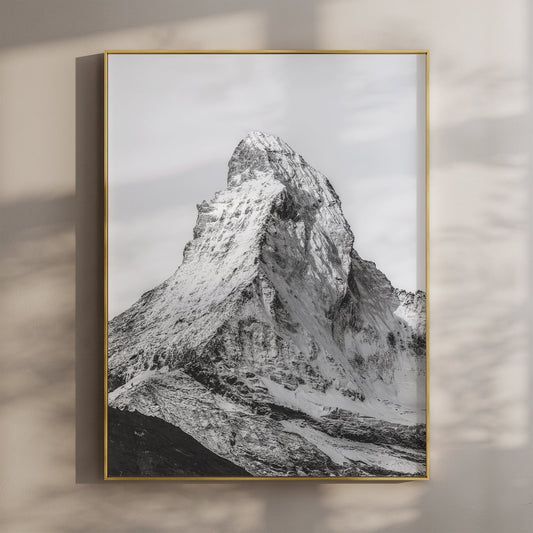
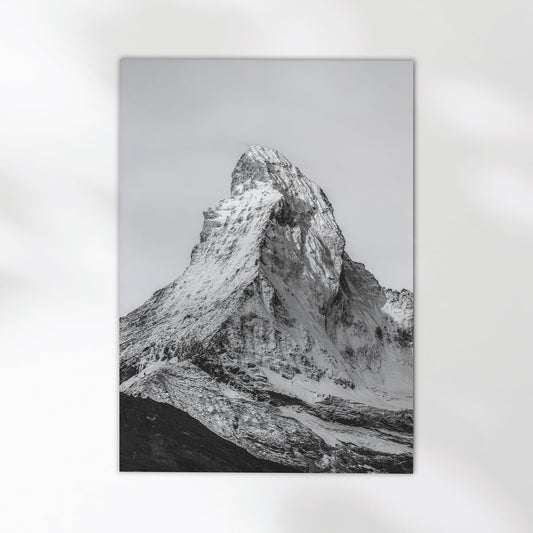
Shop Now →Switzerland wall art is everywhere, which is part of the problem. Search for it and you'll get the same handful of images: the Matterhorn from Zermatt, a mountain lake with perfect reflections, maybe a barn with a cow in the foreground. All fine photographs. None of them tied to anywhere specific enough to mean something. If you've spent time in Switzerland, or have a particular valley, pass or region in mind, there's a better approach than searching for "Swiss Alps print" and hoping for the best. This guide covers what to look for, how different locations translate into a living space, and what actually works on a wall.
Why Location Matters More Than You'd Think
Switzerland is a small country with an enormous range of landscape. The Appenzell region in the northeast looks nothing like the high Pennine Alps above Zermatt. Furka Pass in Valais is a different world from the cliff-hung guesthouses of the Alpstein. Most Switzerland wall art ignores these distinctions and reaches for whatever looks dramatic. The result is prints that could be anywhere in the Alps, and that's exactly why they don't stick.
If you've been to a specific place, you probably remember something about it that a generic alpine print doesn't capture. The first time you see the Monte Rosa massif from the Zermatt valley floor it takes a second to register that what you're looking at is real. No photograph from the tourist viewpoint fully prepares you for the scale of it. That specificity is what makes a print worth living with. It's the difference between a print you explain to guests and one they ask about.
The prints in the full collection are shot on location, in specific places, at specific times. The Äscher shot, for example, was taken in early morning before the guesthouse opened. By 9am there were thirty people on that ledge. That matters when you're trying to find something that reflects a real experience rather than a postcard version of one. For a wider look at what's available from across Switzerland, the Lauterbrunnen wall art guide covers one of the country's most distinctive valleys in more detail.
When you're searching, try to start with a region or a specific feature rather than "Swiss Alps" in general. You'll find something more honest.

Aescher Guesthouse – Appenzell, Switzerland
One of the most distinctive structures in the Swiss Alps, the Aescher guesthouse sits on a narrow ledge beneath an overhanging cliff above Ebenalp. This isn't a building you stumble across. You hike to it. The print captures that sense of improbable placement, the inn pressed against rock with the Alpstein valleys dropping away below. A strong choice for someone who knows the Appenzell region, or who finds that combination of human scale and mountain scale compelling.
View Print →
Light, Mood and Where to Hang It
This is something most print guides skip over, but it's genuinely useful. The light in the Swiss Alps shifts dramatically depending on valley orientation, and that affects how a print feels in a room. North-facing valleys like Lauterbrunnen hold blue shadow for most of the day. East-facing slopes above Grindelwald catch a short golden window just after sunrise, then go into shade. The Gorner Glacier above Zermatt sits in a wide open bowl that gets long late-afternoon light in summer, which is why photographs from there often have that warm, raking quality.
What this means practically: if you're choosing a print for a room that doesn't get much natural light, a high-contrast image with deep shadow and strong form will still read well. Something shot in soft, even light may look flat. Conversely, in a south-facing room with strong afternoon sun, a cooler, high-altitude print with blue-grey tones will balance the warmth of the room rather than fight it.
Size matters too, and there's no universal answer here because it depends on the wall. What I can say with some certainty: a 50x70cm print above a sofa reads as an artwork. A 30x40cm in the same spot looks like a photograph that hasn't found a home yet. For mountain landscapes with a lot of sky or open terrain, bigger is almost always better. The detail earns the size. For tighter compositions, like the Aescher Guesthouse print with its precise architectural subject, a medium size works well because the subject is inherently contained.


Beyond the Famous Peaks
The Matterhorn gets most of the attention, and for obvious reasons. But Switzerland has locations that are just as visually compelling and far less reproduced. The abandoned Belvedere Hotel on the Furka Pass is one of them. It sits at 2,429 metres on one of the great Alpine road passes, a crumbling art nouveau building that somehow makes the landscape feel more vast rather than less. The Belvedere Hotel print works precisely because it's unexpected. Most people who've driven the Furka remember it, but almost no one puts it on their wall.
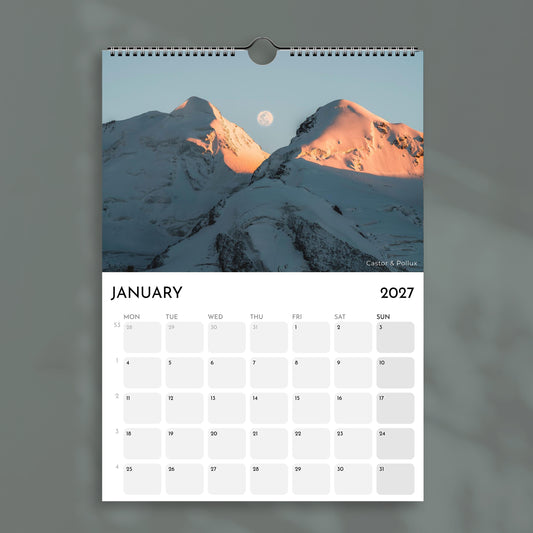
The Monte Rosa massif is another area that doesn't get the recognition it deserves in wall art terms. The Gorner Glacier drops from it in a wide ice tongue visible from the ridge above Zermatt, and the twin peaks of Castor and Pollux sit at over 4,000 metres with a clarity that on a good day makes them look almost touchable. These are not obscure subjects for specialists only. Anyone who has spent time around Zermatt will know the massif, even if they didn't know its name. A print from that corner of the Alps feels specific in a way that a generic "Swiss mountain" print never does.
For people who love Switzerland and are looking for a gift rather than something for their own wall, the best gifts for people who love Switzerland post covers this in more detail. But the short answer is: get something tied to a place they've actually been. A print of the Aescher for someone who hiked up to it. The Gorner Glacier for someone who spent a week in Zermatt. That specificity is what makes it a real gift rather than a nice object.


Gornergletscher – Monte Rosa Massif, Switzerland
Shot from the ridge above Zermatt, looking across the Gorner Glacier toward the Monte Rosa massif. The scale here is hard to convey in a small image, which is why this one rewards a larger print size. The glacier catches warm evening light in a way that is specific to this location and this time of day. For anyone who has seen it in person, the print will read immediately. For anyone who hasn't, it gives a sense of something genuinely remote and rarely photographed from this angle.
View Print →


Switzerland has been photographed more than almost anywhere. The prints worth putting on your wall are the ones that come from a specific place at a specific moment, not from the closest viewpoint to the car park. Start with where you've been, or where you want to go. The right print will be obvious from there.
Mark, Chamonix Prints
Find Your Switzerland Print
Real locations, photographed on the ground. Printed to museum quality and shipped to your door.
Browse Prints →