Wall Art Size Guide: How to Choose the Right Print for Every Room
The most common wall art mistake is choosing a print that is too small. This guide covers every room, every size, framing advice, and the rules that make a wall look intentional.
Why Size Matters
The single most common wall art mistake is choosing a print that is too small for the wall it goes on. A print that looks generous in an online preview can look lost in a real room, especially above a sofa or in a stairwell where the surrounding space is substantial. The print floats, unanchored, and the wall looks like an afterthought rather than a considered choice.
When a print is the right size for its wall, it anchors the space. It creates a visual centre of gravity that the room organises itself around. Everything else, the furniture, the light, the other objects, feels like it belongs. When it is the wrong size, nothing quite settles.
"When a print is the right size for its wall, it anchors the space. When it is the wrong size, nothing quite settles."
This guide gives you the specific sizes that work for each room, practical layout options, and the framing and hanging rules that make the difference between a wall that looks curated and one that looks accidental.
Wall Art Size Chart
All Chamonix Prints are available in standard sizes, making framing straightforward with any high street or online framer. The table below covers every available size with its ideal use case.
| Size (inches) | Size (cm) | Best For |
|---|---|---|
| 5×7" | 13×18 cm | Shelves, desks, small gift prints |
| 6×8" | 15×20 cm | Entryways, tiny walls, nooks |
| 8×10" | 20×25 cm | Desk decor, gallery wall fillers |
| A4 | 21×29.7 cm | Shelf styling, minimalist spaces |
| 11×14" | 27×35 cm | Compact feature in bedrooms or offices |
| 12×18" | 30×45 cm | Mid-sized wall or bedside art |
| A3 | 29.7×42 cm | Clean vertical or landscape display |
| 16×20" | 40×50 cm | Bedroom, hallway, above console tables |
| 16×24" | 40×60 cm | Clean centrepiece for moderate walls |
| 18×24" | 45×60 cm | Standalone art for bedrooms or dining |
| A2 | 42×59.4 cm | Bedroom, workspace, entryways |
| 20×28" | 50×70 cm | Versatile: living room, dining, hallway |
| 24×32" | 60×80 cm | Feature piece for large rooms |
| 24×36" | 60×90 cm | Centrepiece art — bold and modern |
| 28×40" | 70×100 cm | Oversized walls, staircases |
| 30×40" | 75×100 cm | Statement art in large open rooms |
| A1 | 59.4×84.1 cm | Living room centrepiece Popular |
| A0 | 84.1×118.9 cm | Large statement wall or commercial space Largest |

Living Room

The wall above a sofa is the most important decorating decision in most homes. It is the first thing you see when you enter the room and the backdrop to every conversation. The most common error is hanging something too small — a print that looks like it is apologising for being there.
The width of the print should be roughly two thirds the width of the sofa. For a standard 200cm sofa, that means a print or arrangement around 130 to 140cm wide. A single A1 print (59cm) tends to look undersized; a triptych at A3 or a single A0 fills the space properly.
Recommended Sizes
- 50×70 cm (20×28")
- 60×80 cm (24×32")
- 60×90 cm (24×36")
- 70×100 cm (28×40")
- A1 / A0
Layout Options
- One large horizontal print
- Triptych — three A3 or A2 prints
- 2x2 grid of A3 prints
- Single statement A0
Bedroom

Above the bed calls for balance. The print should be centred above the headboard and wide enough to read as a deliberate choice, not an incidental addition. Horizontal orientation generally works better here than portrait, as it echoes the horizontal line of the bed itself.
For a print in a bedroom, consider the mood as much as the size. Quieter, more intimate subjects — a misty lake, a soft alpine dawn, a black and white ridge — tend to suit sleeping spaces better than dramatic adventure prints.
Recommended Sizes
- 40×50 cm (16×20")
- 40×60 cm (16×24")
- 45×60 cm (18×24")
- 50×70 cm (20×28")
- A2 / A1
Style Tips
- Horizontal orientation above headboard
- Muted tones or black and white
- Allow 15 to 20cm above the headboard
- Avoid prints that are too visually busy
Dining Room

Dining rooms benefit from art that enhances the atmosphere without competing with it. The wall behind or opposite the table is the natural focus. Choose panoramic or landscape-format prints that echo the horizontal quality of the table and the gathering around it.
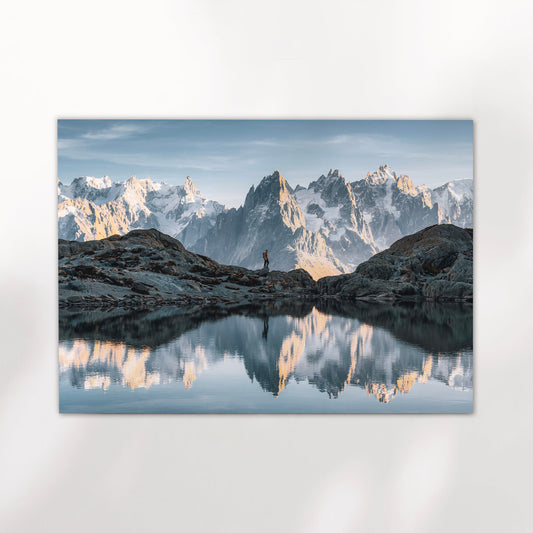
Nature-focused subjects — mountain landscapes, alpine lakes, coastal views — work particularly well in dining spaces. They suggest the outdoors, create a sense of space, and provide something worth looking at during a long meal.
Recommended Sizes
- 40×60 cm (16×24")
- 50×70 cm (20×28")
- 60×80 cm (24×32")
- 70×100 cm (28×40")
- A2 / A1 / A0
Style Tips
- Panoramic or landscape orientation
- Nature-focused subjects work well
- Warm tones complement candlelight
- Centre the print on the wall, not the table
Hallways and Small Walls

Hallways and transitional spaces are underestimated. They are the first and last impression of a home, and a well-chosen print in a narrow space can be more striking than a large piece in an open room, precisely because the viewer is in close proximity to it.
Portrait orientation tends to work better in hallways than landscape, as it echoes the vertical proportions of the space. Two or three prints stacked vertically with consistent spacing create a gallery moment in a corridor without requiring much width.
Recommended Sizes
- 13×18 cm (5×7")
- 20×25 cm (8×10")
- 27×35 cm (11×14")
- 30×45 cm (12×18")
- A4 / A3 / A2
Style Tips
- Portrait orientation preferred
- Stack 2 to 3 vertically
- Match frames for cohesion
- Black and white works well in narrow spaces
Browse the Collection
Mountain, coastal, and alpine photography prints from €22,75. Standard sizes for easy framing, delivered in 3 to 9 days.
Browse All Prints → Mountain Wall ArtFraming and Hanging Tips
Choosing a Frame
The frame is part of the artwork. A good frame complements the image; a poor one competes with it. Three variables matter: the finish, the width, and whether to include a mat board.
| Frame Type | Best Paired With |
|---|---|
| Natural or light oak | Warm landscape prints, summer and autumn scenes, Scandinavian interiors |
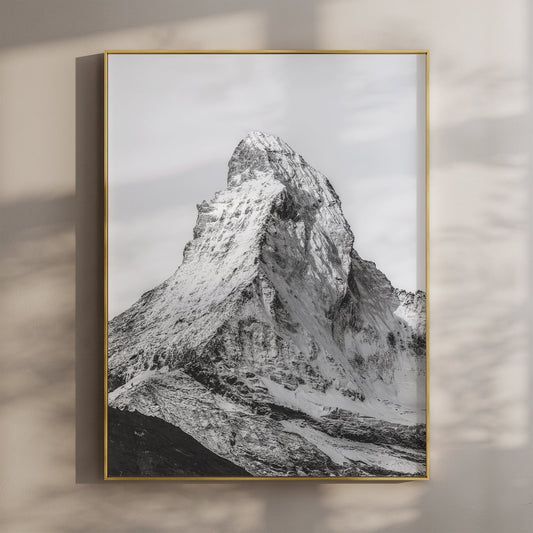
| Dark wood or black | Black and white photography, dramatic alpine subjects, modern interiors |
| Brushed brass or gold | Sunset and alpenglow prints, warm-toned rooms, traditional interiors |
| White with mat board | Minimalist prints, gallery-style display, prints in pale or neutral rooms |
Hanging Height and Spacing
The standard rule for hanging height is that the centre of the artwork should sit at approximately 145 to 150cm from the floor — roughly eye level for a standing adult. This applies to single prints and to the visual centre of a gallery arrangement.
- Above furniture: Leave 15 to 20cm between the top of the furniture and the bottom of the frame. Less than this and the print looks like it is sitting on the furniture; more than this and it floats disconnected from it.
- Gallery wall spacing: 5 to 8cm between prints is the standard for a tight, cohesive arrangement. More than 10cm and the prints begin to read as individual pieces rather than a group.
- Triptych spacing: 3 to 5cm between panels maintains the visual connection. More than this and the three prints lose their relationship to each other.
Common Mistakes to Avoid
Hanging too high
The most common error. Art should hang at eye level, not at ceiling level. Centre point at 145 to 150cm from the floor.
Choosing too small
A small print on a large wall looks timid. When in doubt, go up a size. A print that fills the wall is almost always better than one that floats in it.
Ignoring frame width
A wide frame adds significant size to the overall piece. Measure the framed dimensions, not just the print size, before deciding on a wall.
Mixing frame styles
A gallery wall with three different frame finishes looks accidental. Choose one or two complementary finishes and stick to them across the arrangement.
Ignoring the room's scale
A print that works in a small bedroom can look lost in an open-plan living room. Always consider the surrounding space, not just the wall itself.
No breathing room on the wall
Leave at least 20cm of wall visible on either side of a large print. Too little space makes it feel crowded rather than commanding.
Landscape vs Portrait: When to Use Each
Print orientation is one of the most overlooked decisions. The shape of a print affects how it sits in a room as much as its size does.
Landscape
Above beds, sofas, and dining tables. Echoes the horizontal quality of furniture and creates a sense of width in the room.
Portrait
Hallways, narrow wall sections, and corners. Echoes the vertical proportions of the space and draws the eye upward.
Square or Panoramic
Perfect as standalone focal points. Square prints have a self-contained quality that works well in isolation on a large wall.
Find Your Perfect Print
Fine art photography prints from €22,75. Standard sizes for easy framing. Ships worldwide in 3 to 9 days.
Browse All Prints → Set of 6 Gallery Wall