Après-Ski Adventures: Exploring Chamonix Beyond the Slopes
From glacier trains to Savoyard feasts — how to make the most of every hour in the Alps
Chamonix is rightly celebrated for its skiing. The pistes are legendary, Mont Blanc commands every view, and the air carries that particular sharp-cold feeling you only get at serious altitude. But Chamonix is far more than a ski resort — and anyone who spends their entire visit on the mountain is missing a great deal of what makes this valley so remarkable.
The town itself has a quietly brilliant food scene, a genuine mountaineering culture that predates the ski lifts by more than a century, and a landscape that rewards you differently depending on how you choose to move through it. Whether you're taking a rest day from the slopes or travelling with non-skiers, this guide covers the best of Chamonix after the lifts close — or before they open.
Wander the Town Streets
The heart of Chamonix rewards an unhurried walk. The old quarter around Rue du Docteur Paccard and the area leading down to the Arve river has a pleasant mix of traditional alpine architecture and independent boutiques selling everything from handmade chocolates to serious mountaineering kit. The church of Saint-Michel sits at the centre of it all — worth a quick visit for its setting alone, with the Aiguilles du Chamonix rising directly behind the spire.
Evenings are particularly good for this. The streets fill up around five or six as skiers come down from the mountain, the cafés open their terraces and heat them with outdoor gas burners, and you can spend an agreeable hour or two going nowhere in particular.

The centre of Chamonix, a short walk from the main ski lifts
Ride the Montenvers to the Mer de Glace
The Montenvers cogwheel railway has been carrying visitors up the mountain since 1908 and is one of those rare tourist experiences that still genuinely delivers. The train climbs through snow-covered forest before arriving at a viewing point above France's largest glacier, the Mer de Glace. The scale of it is humbling — the glacier stretches for seven kilometres, though the painted markers on the rock face make quietly clear how much it has retreated over recent decades.
At the top you'll find the Glaciorium, a small museum dedicated to the science and history of glaciers, and an ice cave carved directly into the glacier itself. The cave changes shape each year as the ice moves. It is cold in there regardless of the season — bring a layer you don't mind wearing.

The Montenvers train, in service since 1908, climbing toward the Mer de Glace
Take the Cable Car to the Aiguille du Midi
At 3,842 metres, the Aiguille du Midi offers something that no amount of skiing prepares you for: the full panorama of the Alps laid out beneath you at once. On a clear day you can see into Switzerland and Italy from the summit terrace. The two-stage cable car ride from the centre of Chamonix is itself part of the experience — the final section, which rises almost vertically over the snowfields, is spectacular.
The "Step Into the Void" glass box lets you stand over a sheer thousand-metre drop with nothing visible beneath your feet. In summer, the Panoramic Mont Blanc gondola continues across the glacier to Pointe Helbronner on the Italian side — one of the great high-altitude crossings in the Alps.

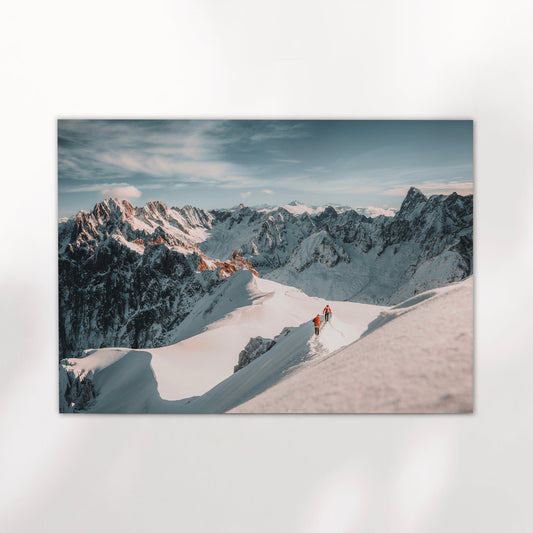
Aiguille du Midi at sunrise — available as a fine art print from Chamonix Prints
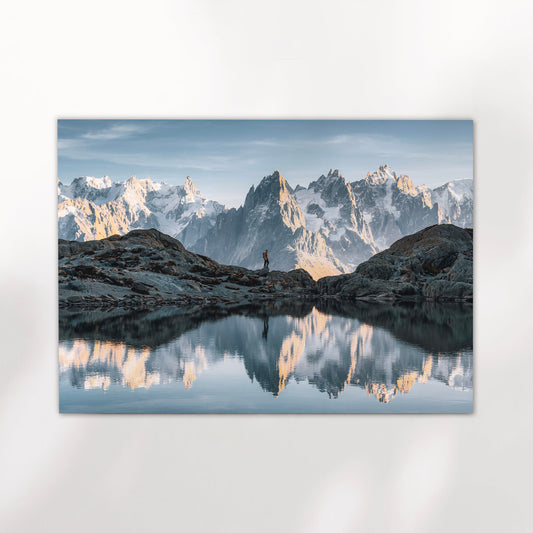
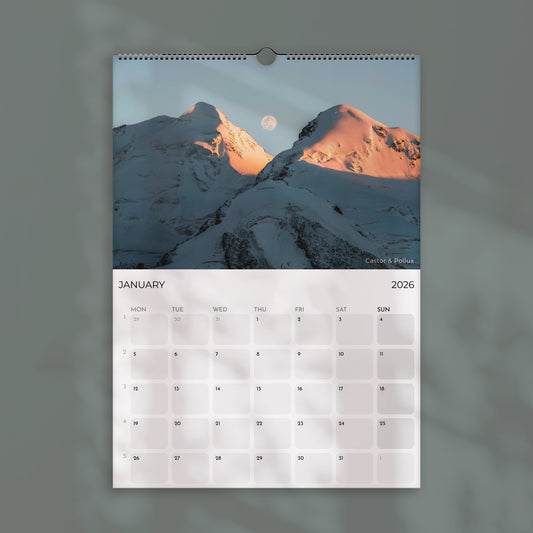
Bring Chamonix Home — Fine Art Prints
Aiguille du Midi — Pink Sunrise
The iconic 3,842m summit in morning light. Giclée on 200gsm matte paper.
View Print →
Les Drus — Evening Sky
The dramatic granite towers of Les Drus under a glowing alpine dusk.
View Print →
Mont Blanc — Sunrise
The roof of the Alps in full morning colour. Available in sizes from A4 to A0.
View Print →Eat and Drink Well: Savoyard Cuisine
The cooking of the Savoie is built around altitude, winters and dairy — and after a day in the mountains you'll appreciate it in a way that is hard to replicate elsewhere. Fondue and raclette are the obvious starting points, and there is no shortage of places to find them, but the best versions are found in the smaller, less obvious restaurants away from the main tourist drag.
For something more refined, Albert 1er holds two Michelin stars and represents the high end of what alpine cooking can be. The menu draws on local produce — lake fish, mountain herbs, aged cheese from small producers — and the wine list is serious without being intimidating. For casual evenings, the creperies and burger spots do the job well, and the pizza is, in my experience, reliably better than it has any right to be in a mountain town.
Before you leave, find a glass of Génépi. It's a herbal liqueur made from a plant that grows on the high slopes of the Alps, drunk as a digestif, and it tastes like the mountains smell at 2,000 metres on a clear morning.

Savoyard cuisine at its best — fondue, raclette and mountain produce
Unwind at a Mountain Spa
QC Terme Chamonix is the standout option — a spa built around the idea of bringing the outside in, with pools and hot tubs at different temperatures, steam rooms and a sauna, and large windows that keep Mont Blanc in view throughout. The combination of warm water and cold mountain air is genuinely restorative in a way that is hard to overstate after a full day at altitude.
Many of the larger hotels in Chamonix have their own spa facilities, some of which are excellent. If you're staying in the valley for a week or more, it's worth building an evening in the spa into your plans rather than leaving it as an afterthought.

QC Terme Chamonix — warm pools with Mont Blanc as the backdrop
Nighttime in the Alps
Chamonix has a lively enough nightlife if that's what you're after — a handful of bars and clubs in the centre stay busy until the small hours during ski season. But some of the best evening experiences here are found outside rather than in.
Guided snowshoe tours run after dark through the forests on the valley floor, often ending at a mountain refuge for vin chaud or a simple hot meal. Night sledging is also offered by several operators — a long, lit run down a prepared track that is considerably more terrifying than it sounds from the description. The cable car at Plan de l'Aiguille sometimes runs late-season evening sessions, and watching the stars from that altitude with the Chamonix lights below is an experience worth planning around.
The ice rink near the town centre is a gentler option — outdoors in winter, well-lit in the evenings, and easily combined with dinner nearby. Local ice hockey team Les Pionniers de Chamonix play home games at the covered rink and put on a loud, well-attended show.
32+ Countries
Fine art prints shipped worldwide on 200gsm FSC-certified matte paper
1–2 Day Production
Every print produced to order. 3–9 day delivery to most destinations
10% Off Your First Order
Sign up to the Chamonix Prints newsletter and save on your first print
Push Further: Ice Climbing and Helicopter Tours
For those who find rest days restless, Chamonix offers two experiences that go well beyond the usual activity-holiday menu.
Ice Climbing
The frozen waterfalls above Argentière, particularly around the Crémerie du Glacier area, are among the most accessible ice climbing venues in the Alps. Qualified mountain guides offer half-day and full-day sessions for complete beginners — you do not need to be a climber, just reasonably fit and willing to be uncomfortable for a few hours. The technique is learnable quickly, and the satisfaction of moving up a frozen wall on front-pointing crampons is unlike anything else I've found in the mountains.

Ice climbing near Argentière — guided sessions available for all levels
Helicopter Tours
A helicopter flight over the Mont Blanc massif is expensive, unambiguously, and also genuinely worth it if it's within your budget. The flight gives you a perspective on the scale of the glacier system that simply cannot be had from the ground or from the cable car. On a clear day the pilot will take you over the Vallée Blanche, around the summit of Mont Blanc, and across toward the Italian side before returning to the valley. Twenty minutes in the air reframes the whole landscape. Book well in advance during peak season.
Museums and Mountain Heritage
Chamonix has a claim to a place in the history of mountaineering that few towns in the world can match. The first recorded ascent of Mont Blanc took place in 1786, and the valley has been at the centre of alpine exploration ever since. The Musée Alpin on Avenue Michel Croz holds the best of this history — original equipment, photographs, expedition diaries and personal effects from the climbers who opened up the Alps in the eighteenth and nineteenth centuries. It is a small museum but a focused one, and worth two hours of anyone's time.
The Maison de la Mémoire et du Patrimoine covers the broader social history of the valley — how Chamonix shifted from an agricultural community to one of the world's great mountain resorts, and what that transformation cost and gained. A quieter visit than the Musée Alpin, but a useful companion to it.
Chamonix Prints
Take the Alps Home With You
Fine art giclée prints of Chamonix and the Mont Blanc massif, printed on 200gsm FSC-certified matte paper and shipped to 32 countries worldwide.
Explore the CollectionFrequently Asked Questions
Chamonix offers a great deal beyond skiing. The Montenvers cogwheel railway and Mer de Glace glacier are accessible to everyone regardless of ability. The Aiguille du Midi cable car reaches 3,842 metres and provides one of the great Alpine panoramas. The town itself has a strong food and café culture, a well-regarded spa, two worthwhile museums, and numerous guided activities including snowshoeing, ice climbing and helicopter tours. Non-skiers often find they have more time to explore the valley than those spending the day on the mountain.
The Mer de Glace is France's largest glacier, located above Chamonix at around 1,913 metres at its tongue. You reach it by the Montenvers cogwheel railway, which departs from a station just east of the town centre and has been operating since 1908. The journey takes approximately 20 minutes. At the top you'll find an ice cave carved into the glacier, the Glaciorium museum, and direct views of the glacier and surrounding peaks. A cable car from the station provides access closer to the glacier surface.
Yes, without hesitation. Winter visits to the Aiguille du Midi offer some of the clearest views of the year, particularly in the early morning before cloud builds around the summit. The deep snow on the surrounding peaks and the quality of winter light make it a different and compelling experience to a summer visit. The cable car operates year-round except for maintenance closures, which are typically in November. Dress as you would for a very cold winter day — temperatures at 3,842 metres can drop to minus 20°C or lower.
Génépi is a herbal liqueur made from Artemisia plants that grow on the high alpine slopes of the Savoie and surrounding regions. It has a bitter, aromatic character and is traditionally drunk after a meal as a digestif. It is widely available in Chamonix — most restaurants and bars in the town will offer it, and bottles are sold in the local shops and the Saturday market. A small glass after a Savoyard meal is as much a part of the Chamonix experience as the skiing.
Yes. Several licensed mountain guide companies in Chamonix run introductory ice climbing sessions specifically designed for beginners. No previous climbing experience is required. Sessions typically take half a day or a full day, take place on frozen waterfalls above Argentière, and include all necessary equipment including crampons, ice axes and a helmet. You do need a reasonable level of general fitness. The guides are UIAGM/IFMGA certified and the activity has an excellent safety record when conducted with a qualified guide.
A minimum of four to five days allows you to combine skiing or hiking with a serious visit to the Aiguille du Midi, a half-day at the Mer de Glace, at least one good evening meal in the town, and some time simply walking around without rushing. A week is more comfortable, particularly if you want to add an activity like ice climbing or a helicopter tour and still have rest time in the spa. Longer stays reward you with the valley's slower rhythms and let you plan around the best weather windows for the high-altitude viewpoints.
QC Terme Chamonix is a premium wellness spa located in the valley with direct views of Mont Blanc. It offers indoor and outdoor thermal pools at varying temperatures, steam rooms, saunas, relaxation areas and a full treatment menu including massages and body treatments. Evening packages are available and tend to be quieter than the daytime sessions. Advance booking is strongly recommended, particularly during the main ski season from January to March.