Arête des Cosmiques
A Complete Route Guide
A celebrated alpine classic on the Aiguille du Midi — mixed rock and ice at 3,842 metres, accessed by cable car and finishing with an unforgettable metal ladder back to the terrace.
Shop Chamonix Prints →The Arête des Cosmiques is one of the great alpine classics of the Chamonix area — a celebrated mixed route on the Aiguille du Midi that combines rock scrambling, snow climbing, and genuine high-altitude exposure in a relatively accessible package. Its accessibility via the cable car and its moderate-to-demanding grade make it a popular objective for climbers seeking a true alpine experience without a multi-day approach.
"Accessible, yet still a true alpine experience — moments of technical challenge, extraordinary scenery, and a unique finish that you'll be talking about for years."
Route Overview & Key Stats
The Approach
Take the Aiguille du Midi cable car from Chamonix to the upper station at 3,842 metres. From the station, descend the exposed snow ridge to reach the Col du Midi at 3,532 metres. This descent can be steep and requires full attention — rope up with your partner if conditions are icy or visibility is poor. From the col, proceed towards the Refuge des Cosmiques, which serves as the starting point of the climb.

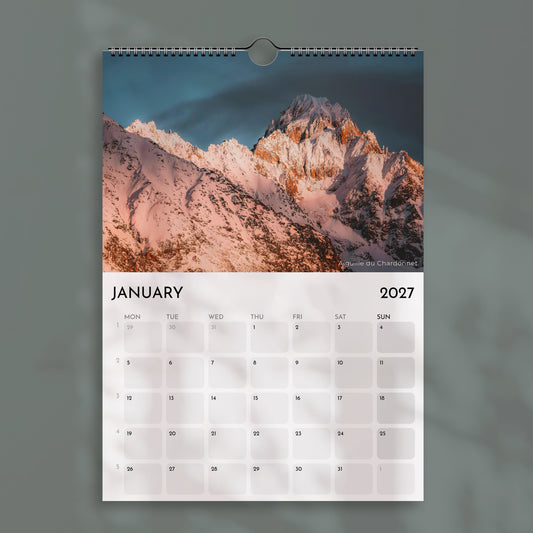
North Face at Sunset — Aiguille du Midi
The north face of the Aiguille du Midi in the last light of the day — the same face you'll be climbing during the Cosmiques Arête. A print that means something different once you've been up there.
View Print →Route Description — 8 Sections
The route is divided into eight distinct sections, each with its own character. Below is a step-by-step breakdown of what to expect on the day.
Descent from the Aiguille du Midi Station
Snow · ExposedExit the cable car station and begin the descent down the exposed snow ridge toward the Col du Midi. The ridge is narrow and can feel intimidating at altitude, particularly for those not accustomed to high-altitude terrain. Careful footwork is essential. Rope up with your partner in icy or windy conditions — don't be caught out by overconfidence on this approach section.
Approach to the Start of the Ridge
Glacier · CrevassesFrom the Col du Midi, head toward the Refuge des Cosmiques. This section is relatively flat and serves as a warm-up for the climb ahead. You are on glacier terrain now — rope up, follow established tracks, and keep a watchful eye for crevasses. Watch for sudden changes in weather as you move across the col.
Initial Ascent on the Ridge
Grade II · Rock & SnowFrom the old Abri Simond Hut opposite the Cosmiques Refuge, begin climbing along the east side of the ridge. This section involves straightforward scrambling on generally solid rock with occasional snow patches — more snow earlier in the season. Less exposed than what follows, and a good section for building rhythm and confidence. Stay roped if conditions are questionable.
Note: In high summer the rock can become dry and crumbly. Check La Chamoniarde conditions before committing to the route.
The First Gendarme & Traverse Options
Grade II–III · Choice PointThe first significant obstacle — a prominent rocky tower along the ridge. Two options:
- Abseil (recommended): Most parties rappel down the gendarme. Straightforward but requires careful rope management and anchor assessment — on a popular route, anchors at key points can show wear. Down-climbing while roped is also possible.
- Traverse: The east-side traverse avoids the rappel with some exposure and careful footwork. Graded around III — often faster for parties comfortable with exposed movement.
Intermediate Mixed Sections
Grade III · Mixed Rock & SnowContinue along the ridge — alternating rock scrambling and snow patches. This section is usually climbed roped due to the exposure and changing terrain. Holds are generally good but snow can cover ideal placements. Take time with each step, especially if the route is icy. Carry quickdraws and slings to clip into the frequent fixed points, particularly as you approach the next gendarme.
The Crux — Smooth Rock Face
Bolt-Protected · Most TechnicalThe technical crux of the route — a steep, smooth rock face with a bolt approximately 5 metres above the start and a noticeable crack that guides hands and feet. Use the crack and any existing holds (some carved for crampons by guides over the years), and pull through confidently. A few quickdraws help secure each move. The crux is short but can feel demanding due to altitude and exposure — don't rush it.
After the bolt, move around the right of the rock to the top. There is an anchor here to secure your partner from. Assess the bolt before clipping — on a busy route, fixed hardware deserves inspection.
Traverse to the West Side & the Couloir
Exposed Traverses · SnowAfter the crux, a series of traverses lead to a snow-filled couloir. These traverses are the most exposed sections of the entire route — move slowly, maintain distance from your partner, and secure your rope to fixed points where possible.
The couloir is typically climbed in one or two pitches. Establish belays on the right side. Snow here can be deep later in the season. Concentrate on footwork and axe placement — particularly important in icy conditions.
Final Rocky Blocks & the Metal Ladder
Summit Finish · MemorableNear the top, large rocky blocks require careful scrambling — often icy, so keep gloves on and test each hold. Less technically demanding than earlier sections but tiring at altitude. Once across the blocks, the route finishes with a metal ladder leading directly onto the Aiguille du Midi terrace. Arguably the most memorable moment of the whole climb — and an exhilarating end to the route, with views stretching across the Mont Blanc massif in every direction.

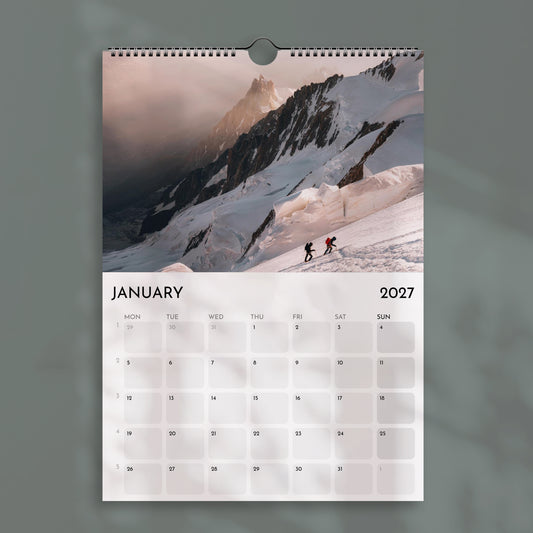
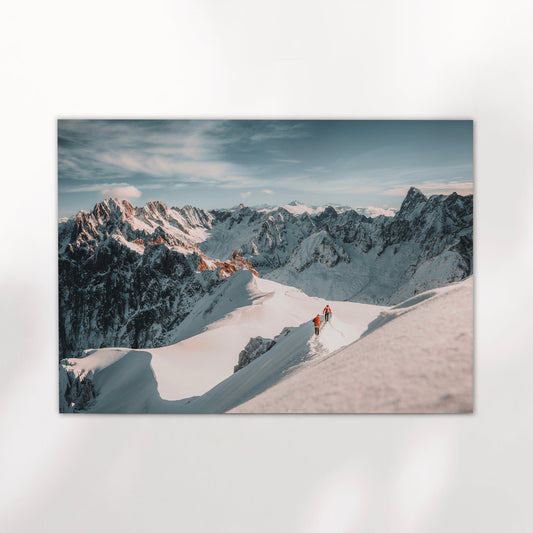
Climbers on the Midi Arête
The exposed snow ridge that begins the Cosmiques approach — two figures small against the sweep of the mountain. One of the most recognisable images of the Aiguille du Midi in winter conditions.
View Print →Equipment List
Carry all of the following. This is not a route where cutting weight on safety equipment is appropriate.
Additional Tips

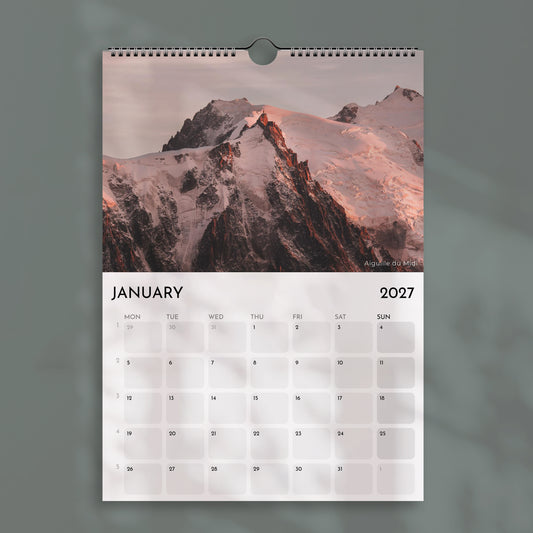
Aiguille du Midi — Pink Sunrise
The summit you'll finish on after the metal ladder — in the first light of the morning. A print that looks different depending on whether you've climbed this or not. We think it looks better if you have.
View Print → All Chamonix Prints →Bring the Aiguille du Midi Home
Fine art prints of the Aiguille du Midi, the Midi Arête, and the wider Mont Blanc massif — from €22,75. Ships worldwide in 3–9 days.
Shop Chamonix Prints → @chamonixprints →