Climbing Mont Blanc
The Goûter Route Guide
At 4,808 metres, Mont Blanc is the highest peak in Western Europe. The Goûter Route is the most popular path to the summit — demanding, beautiful, and among the great mountaineering experiences in the Alps.
Shop Mont Blanc Prints →Mont Blanc, standing at 4,808 metres (15,774 feet), is the highest peak in Western Europe and a bucket-list destination for mountaineers from around the world. The Goûter Route — often called the "normal route" — is the most popular path to the summit, known for its relatively non-technical approach and extraordinary views across the Alps. Do not, however, underestimate the challenge. This route involves a physically demanding multi-day climb, exposure to serious hazards including rockfall and altitude sickness, and requires solid mountaineering skills and proper acclimatisation.
"Reaching the summit of Mont Blanc is not only a physical achievement but a mental one — a profound connection with one of Europe's most legendary peaks."
Route Overview & Key Stats
The Goûter Route begins in the Chamonix Valley and winds through alpine landscapes, providing a gradual acclimatisation path as you ascend. Most climbers approach the summit over two or three days, staying at the Tête Rousse or Goûter Hut before making a summit push from around 2:00 AM on the final morning.
Preparing for the Climb
Mont Blanc demands physical and mental preparation well before you arrive in Chamonix. This is not a route to approach casually.
Physical Training
The climb is strenuous — long hours on steep, uneven terrain at high altitude with a heavy pack. Cardiovascular fitness, leg strength, and endurance are essential. Train with long uphill hikes carrying a loaded pack, and include regular cardio and strength work in the months before your attempt.
Technical Skills
While the Goûter Route isn't highly technical, you must be comfortable with crampons, ice axe, and rope use before you go. The steep rocky ascent to the Goûter Hut involves scrambling and fixed cables — not suitable for those with no exposure experience. Icy and snowy conditions on the summit push require confident crampon technique.
Acclimatisation
Mont Blanc's altitude is significant and altitude sickness is a genuine risk. Spend at least two to three days acclimatising in and around Chamonix before starting the route. Taking the Aiguille du Midi cable car to 3,842m and doing some hikes from the top station is an excellent way to prepare your body for the altitude you'll encounter on summit day.
Guiding & Hut Reservations
No climbing permit is required for Mont Blanc, but hut spots at Tête Rousse and the Goûter Hut must be reserved in advance — capacity is strictly limited. Many climbers hire a guide for the Goûter Route, particularly those with limited high-altitude or glacier experience. Book through the Compagnie des Guides de Chamonix.

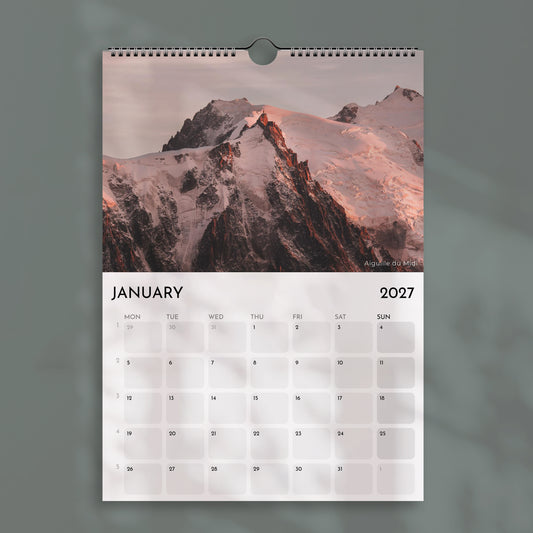
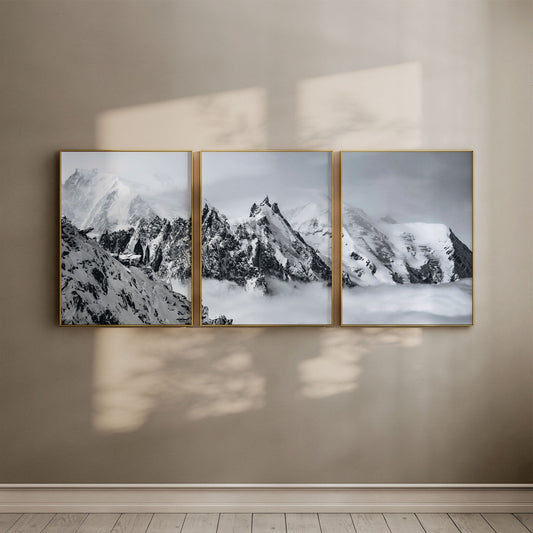
The Mont Blanc Massif from Above
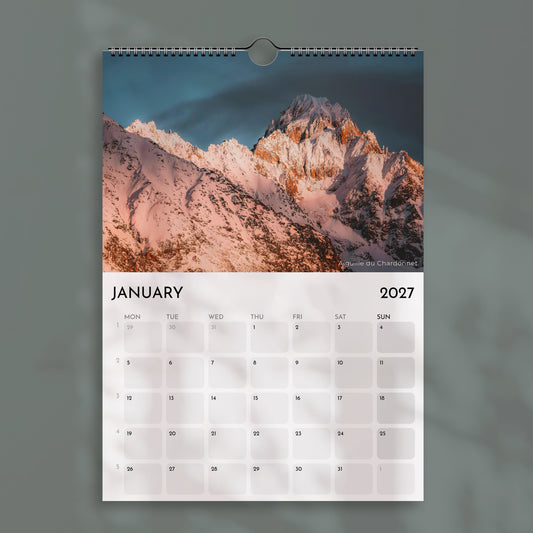
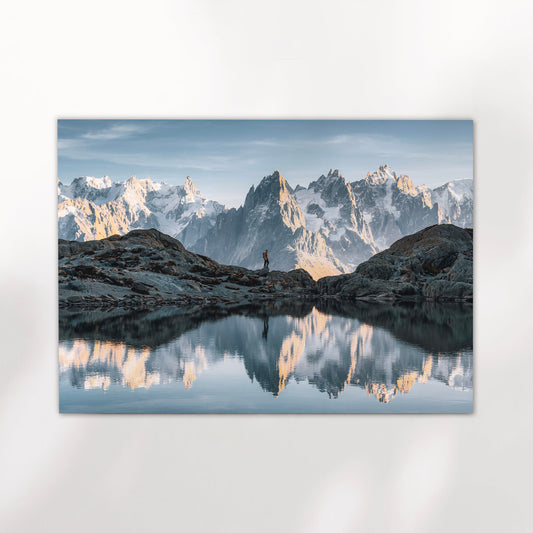
The view that draws climbers from every corner of the world — the full sweep of the massif in early morning light. A print for anyone who has stood on these slopes, or plans to.
View Print →Day 1 — Les Houches to Tête Rousse Hut
Les Houches → Tête Rousse Hut (3,167m)
The journey begins in Les Houches (1,007m), a village just outside Chamonix. From here, take the Bellevue cable car followed by the Mont Blanc Tramway to the Nid d'Aigle (2,372m) — the end of mechanical transport and the start of the climb.
The initial trail follows a steep, rocky path upward to the Tête Rousse Hut (3,167m), taking around 2–3 hours depending on pace and conditions. This is a comfortable first-day option that allows for gradual acclimatisation before the more demanding sections ahead. The hut has good facilities and reliable accommodation — book well in advance.
Note: Some climbers combine Days 1 and 2 into a single long day, pushing directly to the Goûter Hut. This is possible but adds significant elevation gain and fatigue before summit day — extra acclimatisation at Tête Rousse is generally beneficial.
Day 2 — Grand Couloir to Goûter Hut
Tête Rousse → Grand Couloir → Goûter Hut (3,835m)
The second day is the most technically demanding and the most dangerous section of the route. Leave Tête Rousse early to cross the Grand Couloir — approximately 40 metres wide — before temperatures warm and rockfall risk increases. This section must be crossed quickly and with full attention. It is the primary cause of serious accidents on the Goûter Route.
After the couloir, climb a steep rocky ridge to the Goûter Hut (3,835m). The trail involves scrambling and fixed cables — careful footing and confidence with exposure are essential. The hut is the base camp for the summit push, with limited capacity. Reserve your place months in advance.

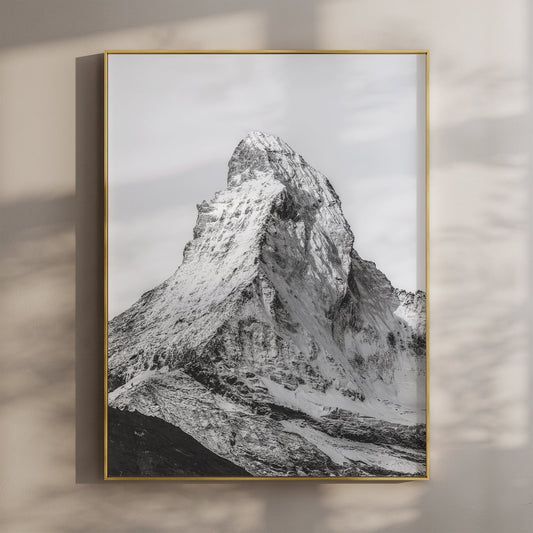
Summiting Mont Blanc
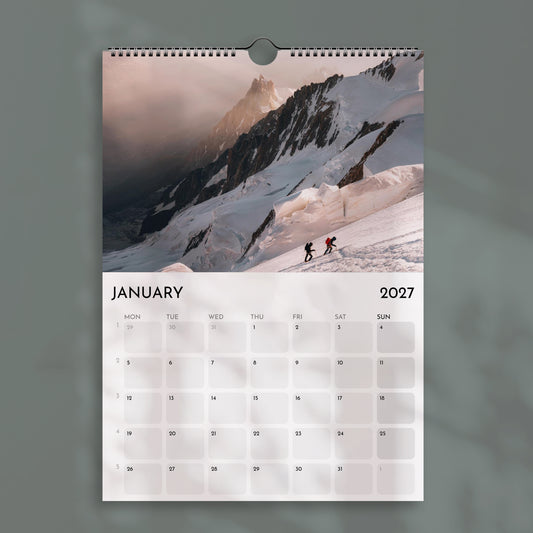
Climbers on the final approach to the summit — the last push after days of preparation. A print that captures the effort, exposure, and extraordinary beauty of the upper mountain.
View Print →Day 3 — Summit Day
Goûter Hut → Summit (4,808m)
Summit day requires a pre-dawn start — around 2:00 AM — to take advantage of cooler, more stable conditions and to reach the summit in daylight. This is the longest and most challenging day, with nearly 1,000 metres of elevation gain from the hut.
The trail leads first to the Dôme du Goûter (4,304m) — a broad, snowy shoulder with extraordinary views. Then to the Vallot Refuge (4,362m), an emergency shelter that can offer a brief rest and wind protection before the final section.
The last major obstacle is the Bosses Ridge — a narrow, exposed arête requiring careful footing and full concentration. With the ridge behind you, the summit of Mont Blanc is within reach. The view from the top — spanning France, Italy, and Switzerland — is one of the great rewards in European mountaineering.
The Descent
The descent follows the same route back to the Goûter Hut — careful navigation along the Bosses Ridge, then the retrace across the Grand Couloir. Many climbers choose to spend a night at the Goûter or Tête Rousse Hut after summiting before continuing down, as the descent after a full summit day is physically demanding and errors in fatigue are common.
Essential Tips for a Successful Climb
- Weather planning: Mont Blanc's weather changes rapidly. Aim for a confirmed window of clear conditions with low wind speeds, especially for summit day. Check Météo France and local guide recommendations the night before.
- Hydration and nutrition: High altitude suppresses appetite but significantly increases calorie and fluid needs. Bring high-calorie snacks and drink regularly. The air at altitude is very dry — dehydration accelerates altitude sickness.
- Respect altitude sickness: Headache, nausea, and dizziness are serious warning signs. If symptoms appear and don't resolve with rest, descend. There is no summit worth a life. Acclimatisation before starting is the best prevention.
- Cross the Grand Couloir early: This is not negotiable. Aim to cross by 6:00 AM at the latest. Rockfall risk increases dramatically as temperatures rise. If conditions look bad, wait or turn back.
- Hire a guide: If you have limited high-altitude or glacier experience, a guide is strongly recommended. The Compagnie des Guides de Chamonix offers Mont Blanc ascents with IFMGA-certified mountain guides.

The View from the Summit of Mont Blanc
France, Italy, and Switzerland spread out below in the first light of the morning. This is what all the preparation, all the early starts, and all the altitude sickness is for.
View Print → All Chamonix Prints →Bring Mont Blanc Home
Fine art prints of the summit, the ascent, and the massif — from €22,75. Ships worldwide in 3–9 days.
Shop Mont Blanc Prints → @chamonixprints →