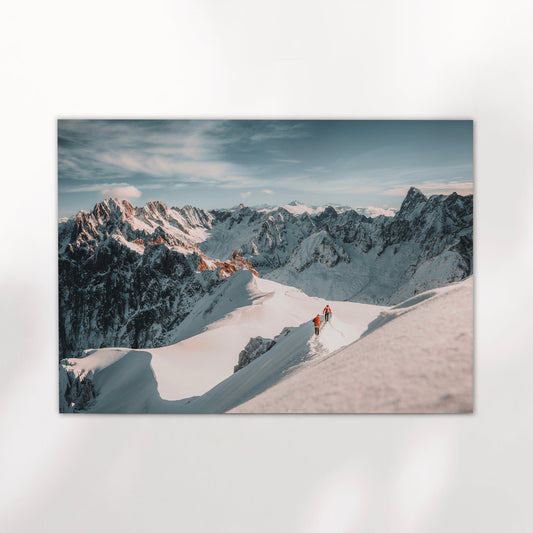
Chamonix 3 Day Itinerary
What to do, see, and photograph in Chamonix over three days. Two versions: one for winter, one for summer. Pick your season and follow the guide.
Why Chamonix
I have photographed mountains across Europe, from the Dolomites to the west coast of Ireland, but Chamonix keeps pulling me back. There is something about the scale of the place. The Aiguille du Midi rises 3,842 metres directly above the town. The Mer de Glace spills down from Mont Blanc like something from another age. The light hits the peaks at golden hour and turns everything amber for about twenty minutes, and then it is gone.
It is also a remarkably versatile destination. In winter it is one of the great ski resorts in the world. In summer it becomes a hiking and climbing mecca with trails that offer some of the finest mountain views in the Alps. The town, the food, and the valley are worth visiting in any season.
"The Aiguille du Midi rises directly above the town. The light hits the peaks at golden hour and turns everything amber for about twenty minutes, and then it is gone."
Choose Your Season
The two itineraries below cover the same three days but with completely different activities. Select the one that matches when you are visiting.
Winter in Chamonix
Winter Chamonix is one of the great ski destinations in the world. The skiing ranges from groomed pistes at Les Houches suitable for families to the Vallée Blanche, a 20-kilometre off-piste glacier descent that is among the finest ski routes anywhere. The Aiguille du Midi cable car runs year-round and offers extraordinary views even without skis. Three days gives you time to cover the key experiences without rushing.
The Vallée Blanche
Morning and Afternoon: The Full Descent
Dedicate your first full day to the Vallée Blanche if you ski. This is the reason many people come to Chamonix in winter and it deserves a full day. The route begins at the top of the Aiguille du Midi cable car at 3,842 metres. From there you walk a short exposed ridge with crampons provided, clip into your skis, and descend 20 kilometres of glacier terrain to the valley floor.
The descent passes seracs, crevasse fields, and some of the most dramatic alpine scenery in Europe. It takes between three and five hours depending on conditions and group pace, finishing at the Mer de Glace glacier where you take the Montenvers rack railway back up to the mid-station before descending to Chamonix by gondola or continuing on skis if conditions allow.
Not a Skier? Les Houches and the Aiguille du Midi
If you do not ski, spend the morning at Les Houches at the western end of the valley. It has beautiful scenery, a relaxed atmosphere, and a toboggan run that is genuinely fun. In the afternoon, take the Aiguille du Midi cable car to the summit station at 3,842 metres. Step out onto the ridge, look south into Italy, east into Switzerland, and up at Mont Blanc 600 metres above you. It is an extraordinary experience regardless of whether you ski.

The Grands Montets and Argentière
Morning: Grands Montets
The Grands Montets ski area above Argentière is the other major skiing destination in the Chamonix valley. It offers steeper, more challenging terrain than Les Houches and some exceptional off-piste opportunities for experienced skiers. The views from the top of the Grands Montets across to the Aiguille Verte and the surrounding glaciers are outstanding.
The gondola from Argentière village takes you up in stages. From the top station at around 3,300 metres, the skiing drops back through the glacier terrain to the valley floor. Allow a full morning and into the afternoon for a proper explore of the area.
Afternoon: Argentière Village
Argentière is a quieter, more traditional village than Chamonix town and worth spending time in. It sits at the head of the valley beneath the Argentière glacier, with the Grands Montets rising steeply behind it. There are good places for lunch and coffee, and the views up the valley from the village centre are exceptional.

The Town, the Culture, and the Light
Morning: Snowshoeing or a Rest Day on the Slopes
Use your final morning according to how your legs feel. If you have skied hard for two days, this is a good morning to slow down. Snowshoeing from the valley floor is one of the most underrated winter activities in Chamonix. The trails through the forests on either side of the valley are quiet, beautiful, and give a completely different perspective on the landscape than the ski lifts.
Alternatively, if you still have energy, the Brévent ski area on the north side of the valley offers a different aspect. It faces south towards Mont Blanc and the views across to the massif are among the finest in the valley.
Afternoon: The Town and Savoyard Cuisine
Spend the afternoon in Chamonix town itself. The Maison de la Montagne has excellent information about the region's mountaineering history and is worth an hour of anyone's time. The Crystal Museum nearby is a genuine surprise: a beautiful collection of Alpine minerals that most visitors walk straight past.
For your final dinner, find a proper Savoyard restaurant and order fondue, raclette, or tartiflette. These are the dishes the region is known for and they are exactly what three days in a cold mountain valley calls for. The local wines from the Savoie region, particularly Apremont and Roussette de Savoie, are excellent and rarely seen outside this part of France.

Summer in Chamonix
Summer Chamonix is quieter than the ski season but arguably more beautiful. The snow retreats from the lower trails, the wildflowers come out across the high meadows, and the cable cars that were full of skiers in February carry hikers and climbers to the same extraordinary heights. The valley is green, the lakes are clear, and the light in July and August is exceptional for photography.
The Grand Balcon Nord and Lac Blanc
Morning: Grand Balcon Nord
Start your first day on the Grand Balcon Nord, a traversing trail that runs across the north side of the valley at around 2,000 metres with sustained views of the Mont Blanc Massif the entire way. Take the Aiguille du Midi cable car to the Plan de l'Aiguille mid-station, then walk west along the trail towards the Flégère cable car.
The route takes two to three hours at a relaxed pace, gains very little elevation, and offers outstanding photography throughout. The interplay of light on the glaciers changes constantly as you move along the ridge. Early morning is the best time: the light is cleaner and the trail is quieter.
Afternoon: Lac Blanc
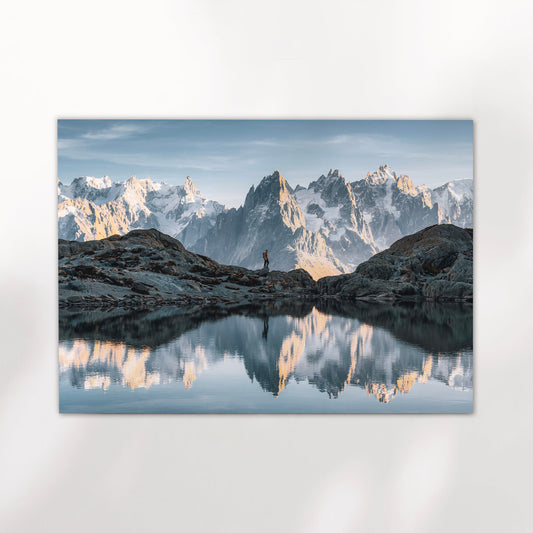
From Flégère, continue uphill to Lac Blanc at 2,352 metres. This high alpine lake sits in a natural bowl above the treeline and on still days perfectly mirrors the Aiguille Verte, the Grandes Jorasses, and the Mont Blanc Massif. It is one of those views that genuinely stops you regardless of how many mountain lakes you have seen before.
The hike from Flégère gains around 500 metres and takes approximately 90 minutes. There is a refuge at the lake for food and drinks. Stay as long as you can. The light in the late afternoon on the water is extraordinary. Return via the Index chairlift back to Flégère, then take the cable car down to the valley.

The Montenvers Railway and the Mer de Glace
Morning: Montenvers Railway
Take the rack railway from Chamonix station up to Montenvers. The 20-minute journey deposits you at 1,913 metres with one of the most striking views in the Alps spread out in front of you. The Mer de Glace, France's largest glacier, stretches away below: a slow-moving river of ice seven kilometres long and up to 200 metres deep.
It is extraordinary and sobering in equal measure. The markers on the rock showing where the glacier surface stood in 1900, 1950, and 2000 make the scale of what has been lost very clear. You can descend to the glacier itself via cable car and walk into an ice cave carved fresh each year.
Afternoon: The Aiguilles Rouges and the Valley Floor
After Montenvers, return to the valley and spend the afternoon on the south-facing trails of the Aiguilles Rouges Nature Reserve. This is quieter than the main Chamonix hiking areas, excellent for wildlife, and offers a different perspective on the massif from the opposite side of the valley. The trails through the forest and across the open ridge above are beautiful in summer light.
Finish the day on the valley floor. The Arve river that runs through Chamonix is lined with paths that are pleasant for an evening walk, and the views up to the peaks from the valley bottom in the last light of the day are some of the most dramatic in the Alps.

The Aiguille du Midi, Culture, and Cuisine
Morning: Aiguille du Midi
Save this for last. The Aiguille du Midi cable car is the most dramatic thing you can do in Chamonix and it is worth keeping as a finale. The cable car rises 2,807 metres in 20 minutes from the valley floor to 3,842 metres. At the top you step out onto a narrow ridge with Mont Blanc 600 metres above you, Italy to the south, Switzerland to the east, and the entire Mont Blanc Massif spread in every direction.
Book the first or second departure of the day. The light is better in the morning, the crowds are smaller, and the chances of cloud-free views are higher. In summer the Panoramic Mont Blanc gondola continues from the summit across to Pointe Helbronner on the Italian border, one of the great high-altitude journeys in the Alps.
Afternoon: The Town, Museums, and Dinner
After the altitude of the Midi, spend the afternoon at ground level. The Maison de la Montagne has excellent information about Chamonix's mountaineering history. The Crystal Museum nearby houses a beautiful collection of Alpine minerals that most visitors walk past without noticing. Both are worth an hour of your time.
For dinner, find a proper Savoyard restaurant and order fondue, raclette, or tartiflette. The local wines from the Savoie region, particularly Apremont and Roussette de Savoie, are excellent and rarely found outside this part of France. Ask the restaurant what they recommend.

Bring Chamonix Home
Fine art prints of the Aiguille du Midi, Lac Blanc, the Vallée Blanche and the Mont Blanc Massif. Unframed giclée prints from €22,75, ships worldwide.
Shop Chamonix Prints → All PrintsPhotography Tips for Chamonix
Chamonix is one of the finest photography locations in the Alps but it rewards preparation. Here are the things I have learned from years of shooting in the valley.
Arrive before the light. The pre-dawn walk to a viewpoint is always worth it. The Aiguille du Midi turns pink before the sun clears the horizon. If you are in the valley you will see it from below. If you are at Plan de l'Aiguille you will be inside it. That is a different photograph entirely.
Weather creates the best shots. The days after a storm, when cloud clears and fresh snow sits on every surface, are the most dramatic photography conditions the Alps offer. Be patient with the weather and be ready to move fast when it breaks.
The valley floor matters. The Midi and Lac Blanc get all the attention, but some of the most striking Chamonix images are shot from the valley floor. The town, the river, the farms in the foreground with the peaks rising behind: that juxtaposition of the domestic and the monumental is particular to Chamonix.
Blue hour over golden hour. In summer the peaks stay lit long after sunset. The transition from alpenglow to deep blue, with the town lights beginning to appear in the valley, is the hour most photographers underestimate.
Take Chamonix Home With You
Fine art photography of the Aiguille du Midi, Lac Blanc, the Mer de Glace and beyond. Unframed giclée prints from €22,75.
Shop Chamonix Prints → 2026 Calendars