The Tour du Mont Blanc: A Photographer's Guide to the World's Most Beautiful Walk
And the perfect gifts for the hikers and runners in your life

There is a moment on the Tour du Mont Blanc — usually somewhere above Courmayeur, looking back across the Val Ferret toward the Grandes Jorasses — when you understand why people come back to this trail year after year. The scale of it. The way the light moves across the rock faces in the late afternoon. The fact that you are standing at a point where France, Italy, and Switzerland meet, and all three feel equally wild and equally magnificent.
We've spent years photographing the Mont Blanc Massif in every season and every condition. But summer on the TMB has a particular energy — a combination of long golden hours, wildflower meadows in full bloom, and a steady stream of hikers and runners from every corner of the world, all drawn to the same 170 kilometres of mountain trail.
If you're planning the TMB this summer, dreaming about it from your desk, or looking for a gift for someone who's just completed it — this is the guide for you.
What Is the Tour du Mont Blanc?
The Tour du Mont Blanc is a long-distance hiking route that circumnavigates Mont Blanc — at 4,808m, the highest peak in Western Europe — passing through France, Italy, and Switzerland. The classic route covers around 170km with roughly 10,000m of cumulative ascent, typically broken into 11 stages over 9 to 15 days.
Most hikers walk anti-clockwise, starting and finishing in Les Houches, a quiet village a short train ride from Chamonix. The trail passes through iconic villages — Les Contamines, Courmayeur, Rifugio Bonatti, Champex-Lac, Vallorcine — before returning through the upper Chamonix valley with Mont Blanc filling the sky ahead of you.

It is, consistently, one of the most popular long-distance hikes or trail runs in the world. And for good reason.
The Photography Highlights: Where the Light Is Extraordinary
Having walked and photographed this route in multiple directions and seasons, these are the moments and locations that stop you in your tracks.
Lac Blanc
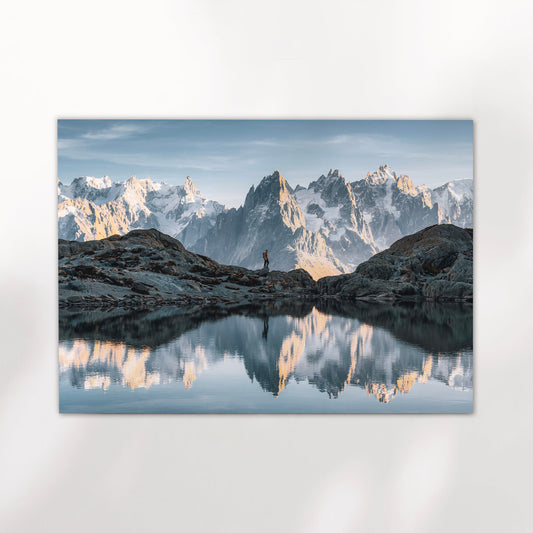
Sitting above Chamonix at around 2,350m, Lac Blanc is perhaps the single most photogenic viewpoint on the entire TMB. On still mornings, the Aiguilles de Chamonix — those jagged granite needles that define the Chamonix skyline — reflect perfectly in the lake's surface. The hike up from the Flégère téléphérique takes around 90 minutes. Go early. The light before 8am is extraordinary, and the crowds arrive by mid-morning.

The Grandes Jorasses from Val Ferret
The section through the Italian Val Ferret, particularly from the trail above Rifugio Bonatti looking across to the north face of the Grandes Jorasses, is one of the most dramatic in the Alps. The scale of that wall — over 1,200m of near-vertical rock and ice — is humbling in person in a way that photographs struggle to fully capture. Late afternoon light in July and August turns the face a deep amber.
Grand Col Ferret
At 2,537m, the Grand Col Ferret is the highest point on the official TMB route and the crossing point from Italy into Switzerland. The views from the col take in the Grandes Jorasses behind you and the Grand Combin ahead. It's worth starting the climb earlier than you think to catch the morning light on the Italian side before crossing.
Champex-Lac
One of the quieter, less-photographed sections of the TMB, Champex-Lac in the Swiss Val Ferret is a small village perched beside a beautiful alpine lake. The surrounding forests and the pastoral quality of the landscape offer a completely different visual register from the dramatic high-altitude sections — calm, green, and deeply Swiss in character.
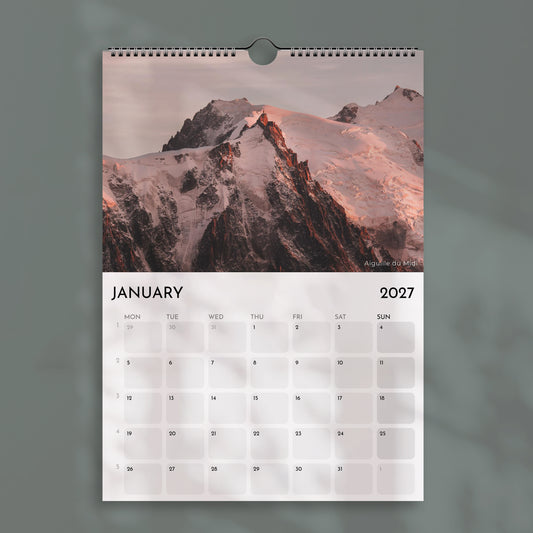
The Aiguille du Midi from the Chamonix Valley
The final stages of the TMB, as you descend back toward Chamonix with the Aiguille du Midi towering above the town, offer a panorama that bookmarks the whole journey. After 11 days and 170km, seeing Chamonix laid out below you with the entire Mont Blanc Massif as a backdrop is one of those moments that doesn't need enhancement.

UTMB Week: When Chamonix Becomes Something Else Entirely
Every year in late August, the Ultra-Trail du Mont Blanc transforms Chamonix into the capital of trail running. UTMB week 2026 takes place at the end of August — the exact dates worth checking on the official website — and draws tens of thousands of runners and spectators to the valley.
The UTMB race itself follows the TMB trail in an anti-clockwise direction, starting and finishing in the centre of Chamonix. It covers 170km with 10,000m of climbing. Most amateur finishers will run through two full nights on the mountain. The atmosphere — particularly at the start on Friday evening and at the finish line from Saturday afternoon onward — is electric in a way that's difficult to describe to someone who hasn't witnessed it.
If you're in Chamonix for UTMB week, the key spectating spots are: the start on the Place du Triangle de l'Amitié in Chamonix on Friday evening, Saint-Gervais-les-Bains roughly 90 minutes in, Courmayeur at the halfway point (expect the leaders around 8–10 hours in), Champex-Lac in Switzerland, and then the finish back in Chamonix from Saturday afternoon.
At 3am on the mountainside above Les Contamines, there will be people cheering. In Courmayeur, the main square erupts at the arrival of every runner. It is, genuinely, emotional.
If you're planning to hike the TMB during this period, note that the trails around Chamonix will be busy, and accommodation books up months in advance. Late August to mid-September, once UTMB week has passed, offers cooling temperatures, thinner crowds, and some of the clearest skies of the summer.

Gifts for TMB Hikers and UTMB Runners
If someone in your life has just completed the Tour du Mont Blanc — or is training for UTMB — there is a very specific kind of gift that lands perfectly: something that captures the place they've been, the landscape they've given weeks of their life to.
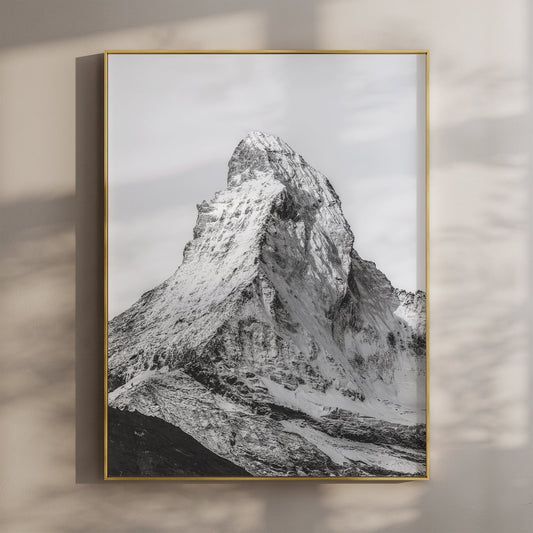
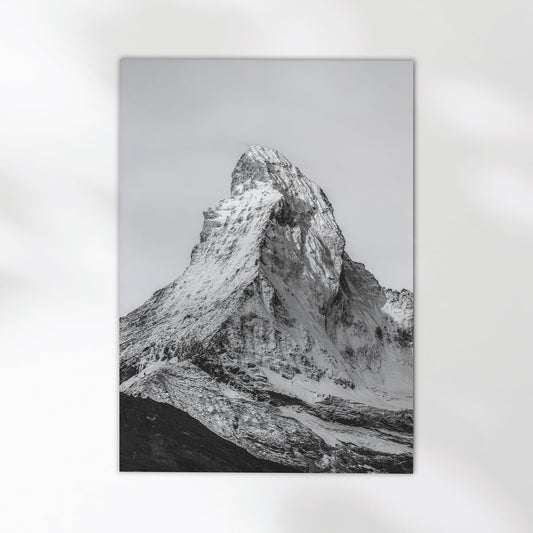
A print isn't just decoration. For someone who's stood on the Grand Col Ferret at sunrise or watched dawn break over Lac Blanc, a photograph of that place on their wall is a portal back to the best version of themselves. It's the physical equivalent of the memory.
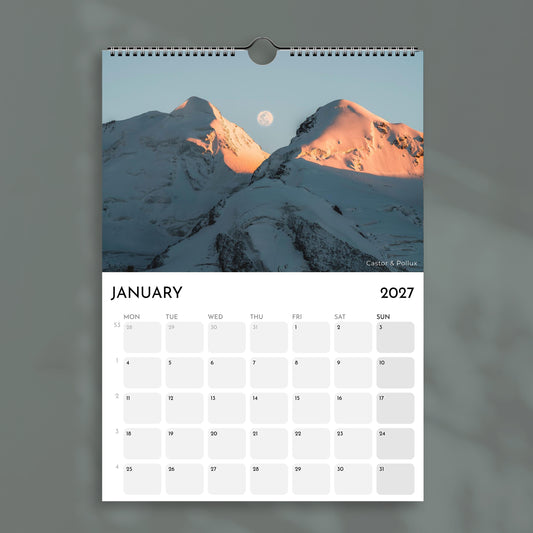
Here are some of our most popular prints for TMB and UTMB veterans:
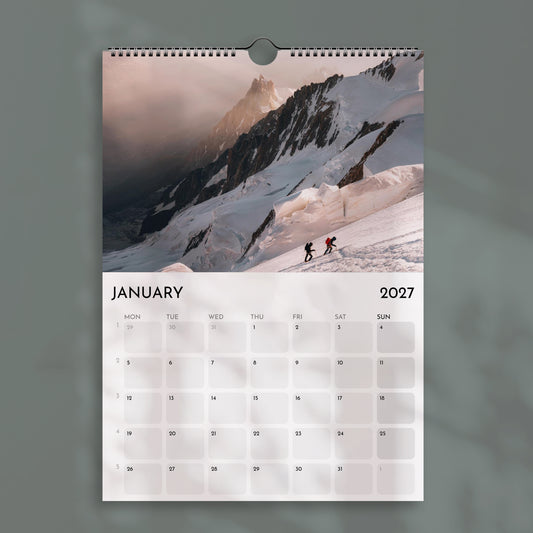
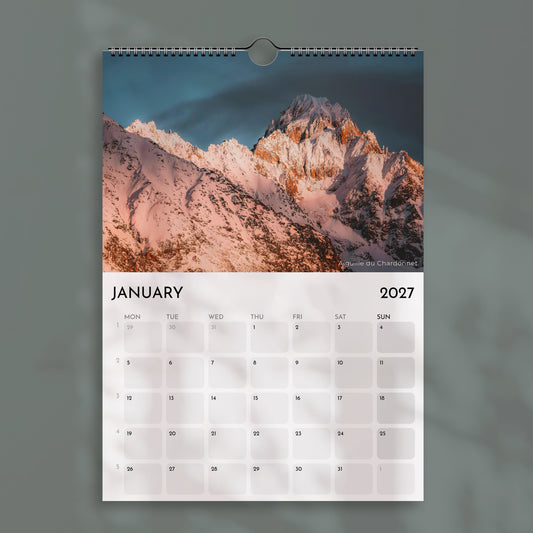
For the Chamonix devotee — Our prints of the Aiguille du Midi, the Midi Arête, and the mountaineers traversing the Vallée Blanche capture the raw, vertical character of the Chamonix skyline that TMB hikers see from below for 11 days.
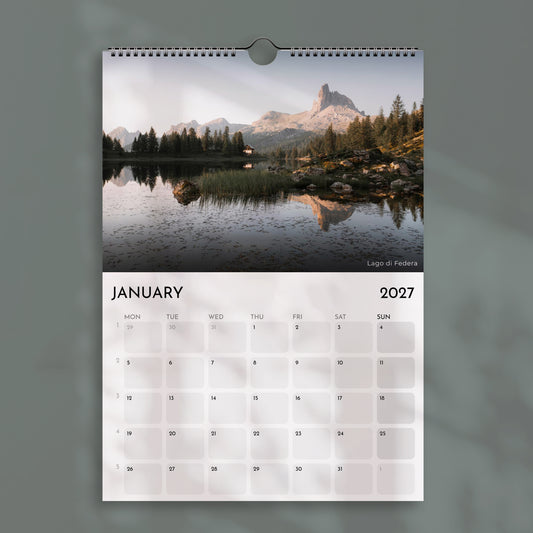
For the person who fell in love with the Italian Alps — Our Dolomites and Grandes Jorasses prints carry the same dramatic light and scale as the Val Ferret sections of the TMB.
For the runner — Our climbing and ski touring prints appeal to the same aesthetic sensibility as UTMB runners: movement, effort, wild landscape. The mountaineering prints in particular tend to resonate.
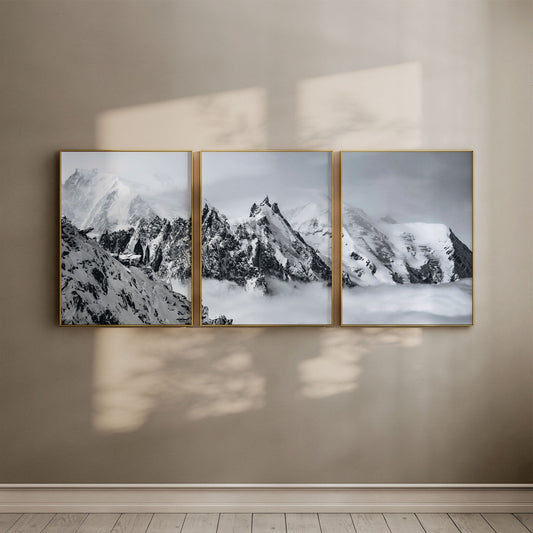
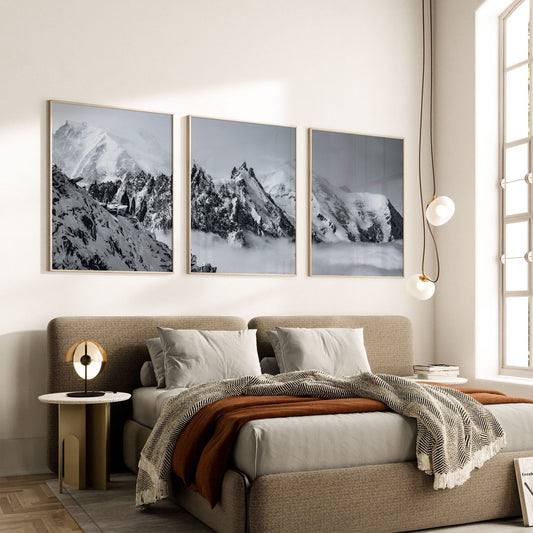
For a gift set — Our sets of three are a particularly good option for TMB completers, allowing them to build a small gallery wall of places they've actually stood. The Chamonix set of two, the Alps print set, or a mix across Chamonix, Switzerland, and the Dolomites tells the three-country story of the route itself.
All prints are produced on 200gsm premium matte paper, fulfilled locally in 32+ countries, and ship worldwide in 3–9 business days — in time for a post-TMB celebration, a birthday, or a Christmas gift for someone whose summer was defined by 170km of mountain trail.
Planning Your Own TMB: A Few Practical Notes
When to go: July and August are peak season — refuges are busy and booking well in advance is essential. Late June offers quieter trails and the possibility of snow on higher passes. Late August to mid-September has the best light, cooler temperatures, and noticeably fewer people after UTMB week clears.
Note for 2026: The Refuge de la Croix du Bonhomme is undergoing major renovation and is scheduled to close from mid-August 2026, with reopening projected around 2029. Hikers departing later in the 2026 season should check the refuge's official website and consider alternative stage planning.
Direction: Anti-clockwise is the traditional direction and what most guidebooks recommend. It puts the hardest climbing on the first day and saves the most spectacular Chamonix-side descent for the finale.
Accommodation: Booking refuges a minimum of 3–4 months in advance for July and August departures is strongly recommended. Spaces go fast. YIf the refuges are full — and in July and August they often are — the towns along the route have hotels and private rentals worth booking early. Courmayeur at the halfway point is particularly well served. We'd recommend checking Booking.com and Airbnb for availability alongside your refuge bookings.
Getting there: Geneva Airport (GVA) is the recommended arrival point. The Mountain Drop-offs shuttle service connects Geneva directly to Les Houches and Chamonix. You can also get transfer busses from Geneva Airport to Chamonix – Flixbus and Swiss Tours are some popular options. Visit omio.com for a full overview of options.
All of the locations photographed in this post are available as fine art prints at Chamonix Prints. Browse the full collection at chamonixprints.com, or explore our prints by location to find the exact view that means the most to you.