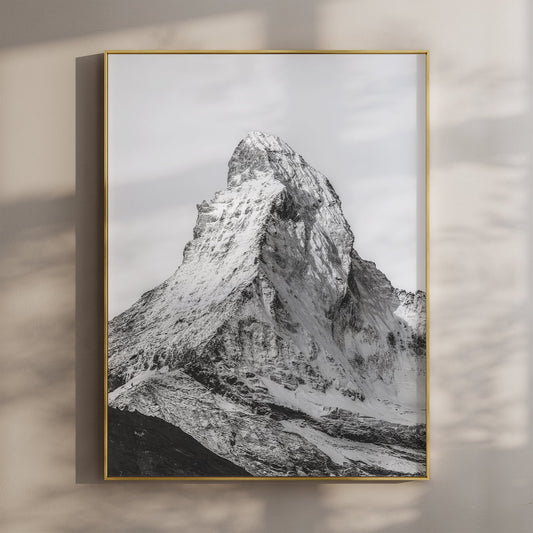
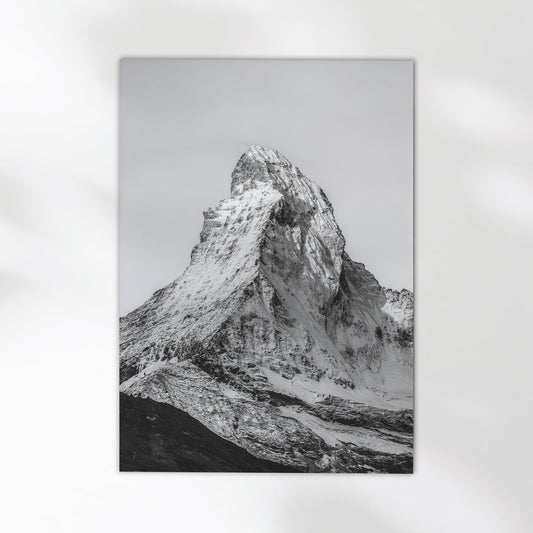
The town sits at 1,035 metres and the Aiguille du Midi stands at 3,842, so every picture of Chamonix, France is really a picture of one vertical wall.
See the Chamonix printsChamonix, France is a valley in Haute-Savoie with a single defining fact: the Aiguille du Midi rises nearly 2,800 metres straight above the town. Everything a photograph of this place can say follows from that height. A print tells the truth only if it shows where in the vertical the photographer stood and what hour it was.
A town at 1,035 metres under a peak at 3,842
The Chamonix valley sits at around 1,035 metres, and the Aiguille du Midi (3,842m) rises directly above the town to the south. The cable car shows the scale in practice. It climbs from the town to the summit station at 3,777 metres in two stages, with a change at Plan de l'Aiguille (2,317m). The journey takes approximately 20 minutes and rises nearly 2,800 metres, one of the greatest vertical rises of any cable car in the world.
From the street, that means the mountain is not a backdrop. It is a wall overhead. A photograph taken from the valley floor has to squeeze all of that height into the top of the frame, which is why it reads as looming rather than distant. Here is what that looks like in the print I'd point to first.

Aiguille du Midi – Chamonix, France
The view that defines life in the valley: the needle above the rooftops of Chamonix, the cable car station just visible at the summit, the massif filling the southern sky. Giclée on 200gsm premium matte fine art paper, from €22.75.
See the valley viewThree ways to see the same massif
The five Chamonix prints look at the same massif from three different places, and the place changes the picture.
The first is the valley floor. In the print from the valley, the Aiguille du Midi (3,842m) rises above the rooftops of Chamonix, with the cable car station just visible at the summit and the massif filling the southern sky. The town sits at around 1,035 metres, so the peak is overhead rather than in the distance. It is a view that many residents know well.
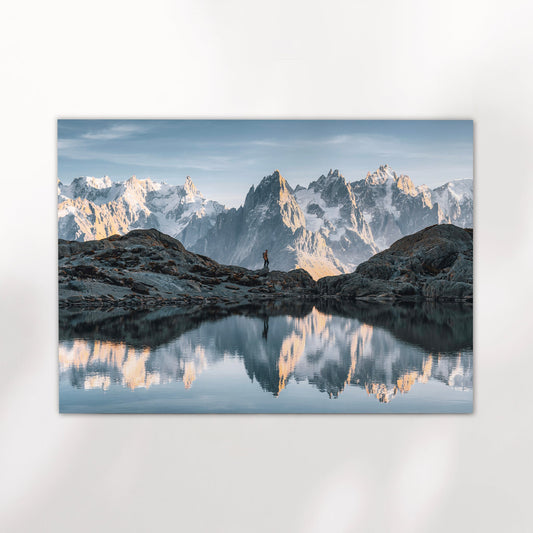
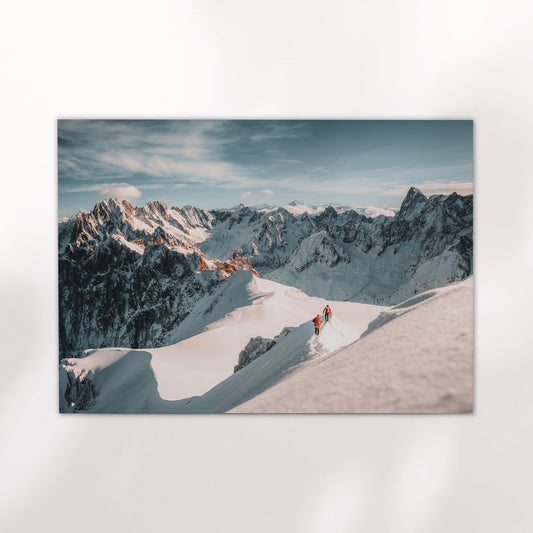
The second is the dawn skyline, in the wider landscape format. The valley is dark, the mountain glows, and the frame is wide enough to show the full scale of the range as the first light catches the ridgelines.
The third is the upper valley above Argentière, where the Aiguille du Chardonnet (3,824m) stands among the Argentière and Tour glaciers. It is a quieter part of the valley than the peaks directly above the town.
None of these is the more correct Chamonix. They answer different questions about which part of the place you want to keep.

The ten minutes before the valley wakes
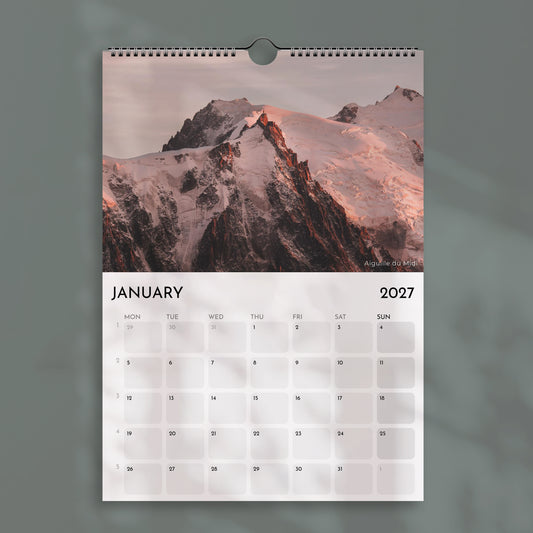
The Aiguille du Midi turns rose in a brief window at dawn, maybe ten minutes, while everything below remains in the deep blue of pre-sunrise. It is the moment the mountain earns its name, and it is easy to sleep through.
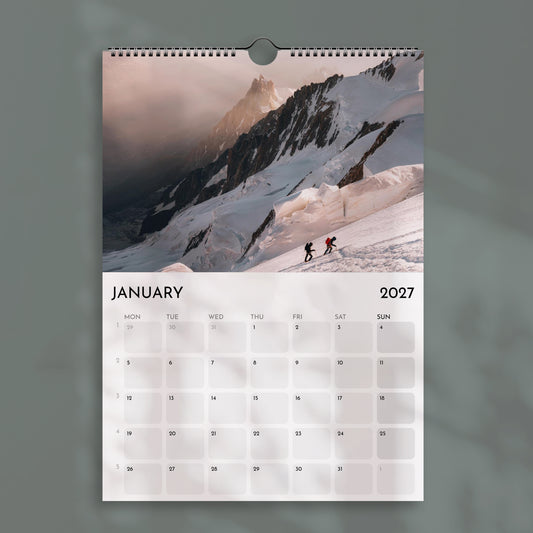
There are two dawn prints of it, and the format decides what leads. The portrait gives the needle-sharp peak catching the first pink of the day. The landscape widens out to show the surrounding massif and the full scale of the range as the first light reaches the ridgelines. In both, the valley is dark and the mountain glows.


The quieter side of the valley: Argentière and the Chardonnet
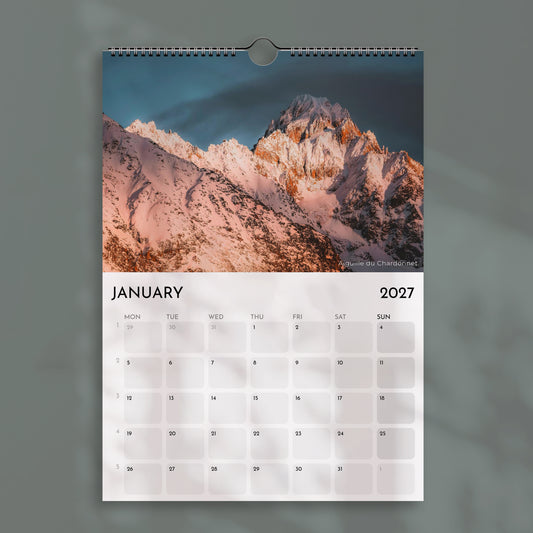
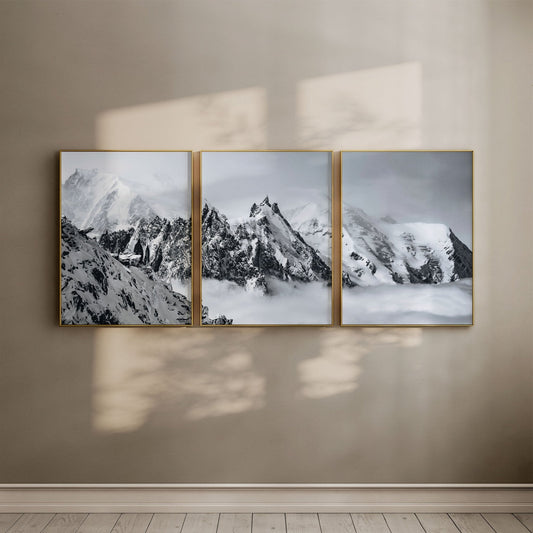
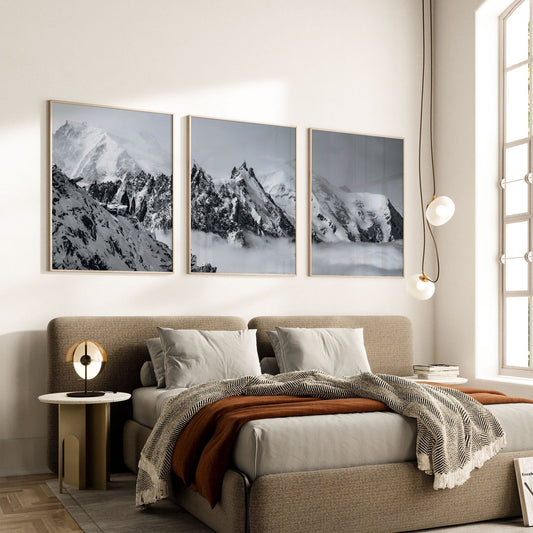
Above Argentière the Aiguille du Chardonnet gives two opposite moods from one peak. In deep winter it is encased in ice and snow, the peak at its most severe, and the cold clarity of the light strips the landscape back to rock, ice and sky. It is a print with very little in it, which is exactly why it holds attention.
At the end of the day the same peak turns pink, soft alpenglow washing the upper faces as the sun drops behind the ridge. It is a quieter sunset than the peaks directly above Chamonix, and I find it the gentler of the two to live with.

Aiguille du Chardonnet – Chamonix, France
Deep winter above Argentière, the Aiguille du Chardonnet (3,824m) in ice and snow, among the Argentière and Tour glaciers. Also available in a pink alpenglow version for the end of the day. From €22.75.
See the winter Chardonnet
Which Chamonix suits the wall you have
Choosing between these comes down to what you want the room to hold. The valley-floor view carries the lived-in presence of the town and the peak above it. The dawn prints bring drama and a sense of range. The winter Chardonnet offers cold clarity. If you want a longer look at matching light to a particular room, I wrote about it in Chamonix Wall Art: Matching the Light to the Room.
One honest observation, not a rule: the sunset and dramatic-light shots tend to divide opinion, striking at first and sometimes heavy by the end of a year. The clear, simply rendered light tends to sit quietly longest. All five prints are giclée on 200gsm premium matte fine art paper, unframed, so you can choose your own frame, and they run from 5x7" to A0.


Start with the height you remember
Valley floor, dawn skyline or the quiet upper valley: pick the vantage point that matches the Chamonix you have in mind, then the size that suits your wall.
Browse the Chamonix prints