What actually works on a hallway wall, and why the rules are different here.
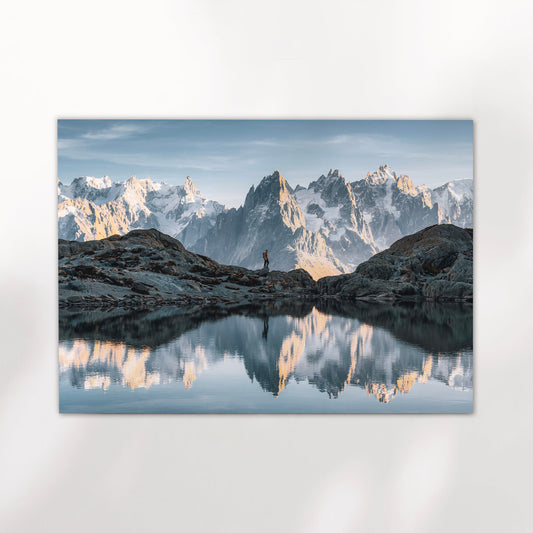
Shop Now →Nobody sits down in a hallway. That single fact should decide most hallway wall art ideas, because a print here gets seen for two seconds, twenty times a day, not studied from a sofa. The Ammersee print works because it reads instantly, even in passing.


Why Hallway Light Changes Everything
Hallways rarely get direct sun. Most rely on a landing window, a skylight, or whatever spills in from the rooms either side. That light shifts through the day in ways a living room's rarely does. A print that looks warm at noon can go flat and grey by evening, under a hallway bulb.
This is why high-contrast colour landscapes struggle here. They need consistent light to read properly. A muted, tonal image holds its character under changeable light far better than something that depends on saturation to work.
It's also why hallways don't behave like a smaller version of the living room, and treating them that way is the most common mistake. Our guide on choosing wall art size for each room gets into this in more detail. A hallway asks for restraint, not a scaled-down version of the same choices.
Think about what the print has to survive: dim mornings, bright afternoons through a side window, evening lamplight. Choose for the worst of those conditions, not the best.

Ammersee, Bavaria, Germany
Golden hour light through bare winter branches, shot from the lake's western shore. Printed on 200gsm premium matte fine art paper using giclée printing, with a smooth non-reflective finish that holds up under changing hallway light.
View Product →
What Actually Works on a Hallway Wall
A hallway print needs to work in a glance and survive being seen a hundred times a week. That's a different job to a living room piece, which gets studied from a chair for years. Busy compositions, layered detail, high-contrast colour: all of it reads as noise once you've walked past it a few hundred times.
Prints with breathing room hold up better. Sky, water, a stretch of negative space for the eye to land on. They stay restful no matter how many times you pass them, because there's less for the brain to re-process on each pass.
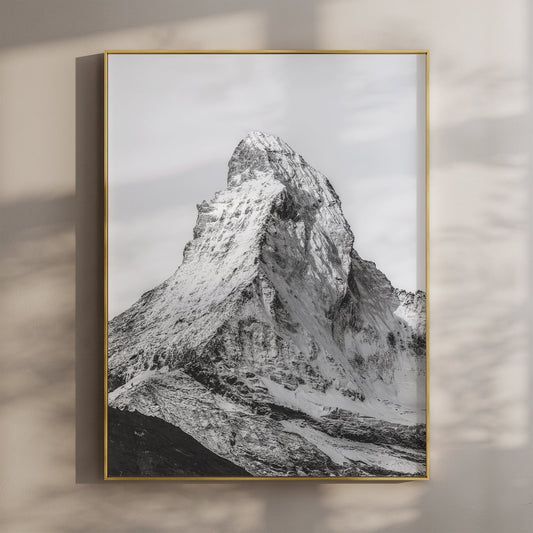
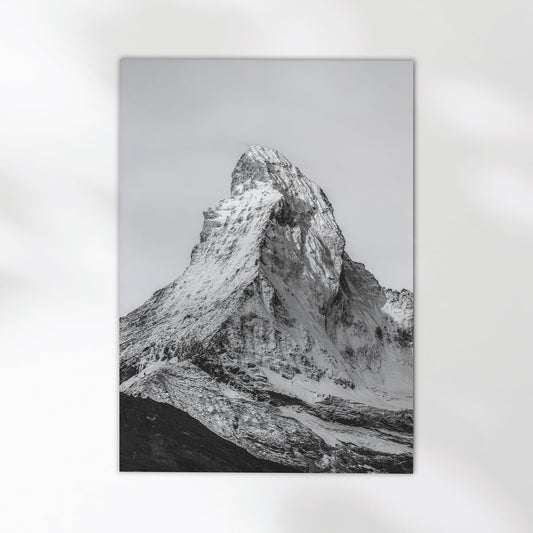
Black and white does a lot of the heavy lifting in narrow spaces. It sits quietly against most wall colours and doesn't compete with coat hooks, mirrors or whatever else lives in a hallway. Colour still works, but it needs to be the calmer kind: the sort you get from a still lake at dawn rather than a dramatic ridge at sunset.
Sizing for Traffic and Flow
Hallways are walked through, not stood in, so sightlines are shorter and often at an angle. A single well-chosen print usually beats a cluster of small frames, which need close, stationary viewing to make sense and rarely get it here.
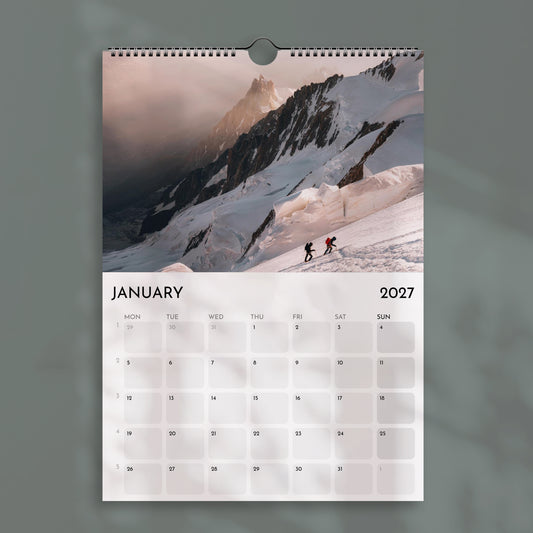
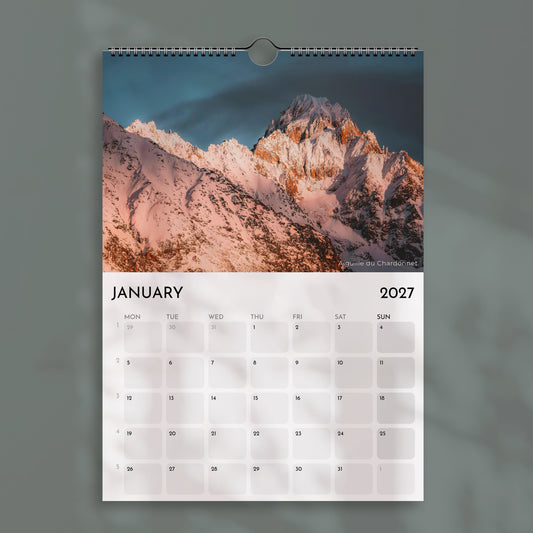
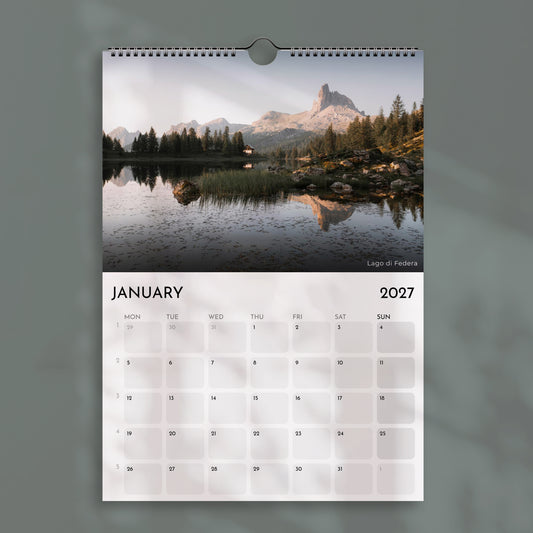
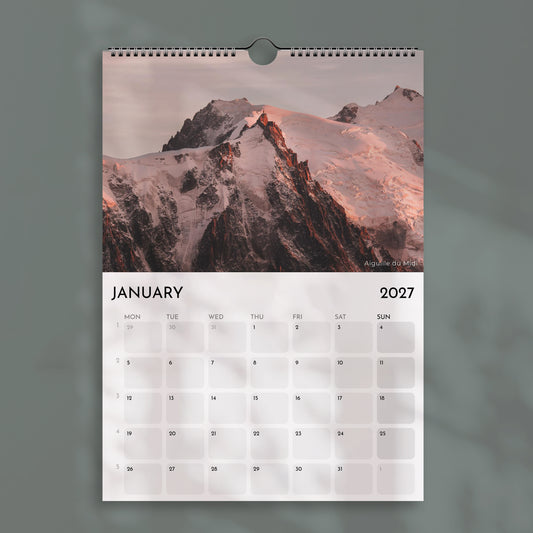
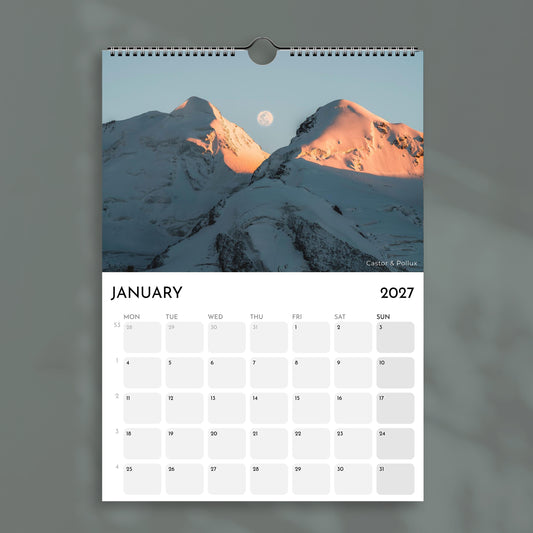
If your hallway has one long, unbroken wall, that's the spot for a single larger piece rather than a run of matching ones. If it's broken up by doorways, a calendar's monthly rhythm can suit a narrow stretch better than a single large print would, since each month gives a small, changing point of interest without asking for a big empty wall.


Ireland 2027 Wall Calendar
Twelve months shot along Ireland's coast and inland: cliff edges and Atlantic weather, quiet lakes, stone walls and green fields. 12 months on 7 sheets total, each sheet double-sided with one full-page month per side, plus a cover and back page. Printed on premium 250 gsm semi-gloss silk paper.
View Product →What size wall art is best for a hallway? ⌄
Should hallway art match the rest of the house? ⌄
Is black and white or colour better for a hallway? ⌄
How many pictures should go in a hallway? ⌄
What height should hallway art be hung at? ⌄
Find the right print for your hallway
Quiet compositions, printed on 200gsm premium matte fine art paper, unframed and ready for your own frame.
Browse the Collection →