A single large print anchors a wall. Three prints hung as a set do something different.
Shop Now →A set of three wall art prints doesn't just fill more wall than one print does. It changes how the eye moves across the room. One large print stops you at a single point. Three prints, hung with the right spacing, pull the eye left to right and back again, and that movement is what gives a room a place to rest instead of a wall it competes with.
One Print vs a Set of Three
A single oversized print does a specific job: it dominates. It says "look here" and the room organises itself around that one point. That's the right choice for a narrow hallway wall or a small study where there isn't room for anything else to happen.
A set of three does the opposite. It spreads the same visual weight across a wider stretch of wall, which means the eye has to travel to take it in. That's rhythm, not domination. It's why three prints above a sofa often feel calmer than one big canvas in the same spot, even though they're covering roughly the same area. The Connemara set of three is a good example: three separate frames, one continuous shoreline running through them, so the eye reads left to right the way it would read a real view out a window.
The trade-off is space. A triptych needs width to breathe, and it needs three coordinated images rather than three prints that happen to be the same size. Three unrelated pictures hung in a row read as clutter, not as a set. If you're still deciding between a single statement piece and a set for a specific room, our guide on which Mont Blanc prints actually work at home covers that decision in more depth.

Connemara, Galway, Ireland – Set of Three Fine Art Prints
Three panels of the same Connemara shoreline, printed on 200gsm premium matte fine art paper using high-quality giclée printing. The stillness of the water and the open sky give the eye somewhere to land as it moves across all three frames.
View Product →
Spacing and Subject Matter Decide Whether It Works
The gap between panels matters more than the images themselves. Hang them too close and the eye can't tell where one frame ends and the next begins, so the set reads as a single blurred image instead of three distinct ones. Hang them too far apart and the connection breaks entirely: the eye stops travelling between them and treats each print as its own separate thing on the wall, which defeats the point of buying a set in the first place.
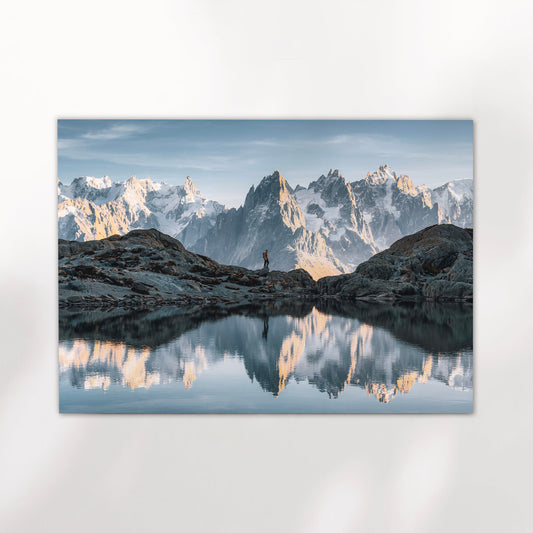
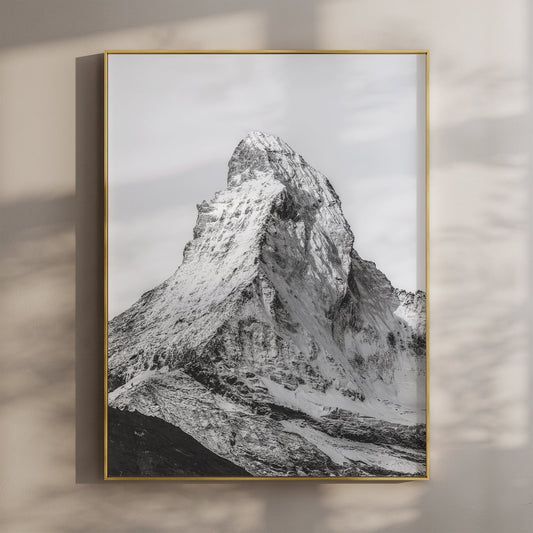
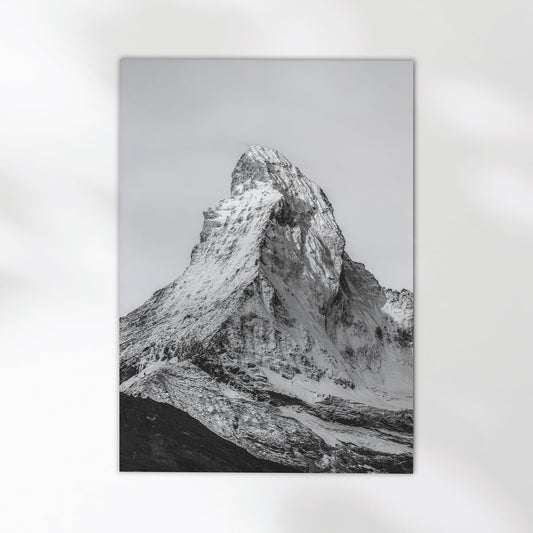
Subject and colour matter just as much. Black and white sets are the safer choice for almost any room, because monochrome doesn't fight with the sofa fabric, the rug, or whatever else is already on the walls. The Aiguille de Bionnassay and Grandes Jorasses set works in a way a colour landscape pair often doesn't, precisely because there's no colour to clash with. Colour landscape sets can be striking, but they need a room that's already fairly neutral to sit in, or they end up competing with everything around them rather than adding to it.
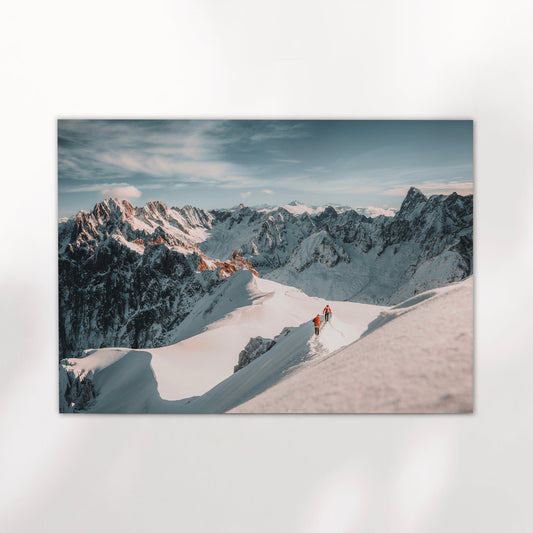
Subject consistency is the other piece people skip. A triptych doesn't need to be three crops of the exact same photograph, but it does need a shared thread: the same location, the same light, the same tonal range. The Vallée Blanche mountaineers print works as a single panel on its own, but it also shares a location and a palette with the full ski set, which is why the two can sit near each other in a room without looking mismatched.
| Set size | Best wall width | Typical spot |
|---|---|---|
| Set of two | Narrower walls | Either side of a doorway, above a console |
| Set of three | Wider walls | Above a sofa, bed, or along a hallway |


Choosing the Right Set for Your Room
Not every wall needs three prints. A narrow stretch between two windows will fit a pair far better than a triptych, and forcing a three-panel set into a tight space just recreates the crowding problem a triptych is supposed to solve. That's where a set of two, like Les Drus and Lac de la Flégère, earns its place: a peak and a still lake, both in black and white, giving contrast without needing the width a triptych demands.
If you do have the wall width, decide what the set is actually of before you size each panel. A single scene split into three frames (the Connemara shoreline, the Vallée Blanche ski route) reads as one composition and forgives slightly uneven spacing. Three separate images need tighter spacing to hold together, because there's no continuous line for the eye to follow between them.
Every print in these sets is made on 200gsm premium matte fine art paper using giclée printing, unframed, and printed locally in over 32 countries with delivery in 5 to 7 business days. Browse the full collection if you want to compare sets side by side before deciding on wall width.


Les Drus, Lac de la Flégère – Chamonix, France (Set of 2 – black & white)
A dramatic peak paired with a still alpine lake, both in monochrome, giving a contrast of verticality and stillness without the width a three-panel set needs.
View Product →


What is the ideal gap between three prints in a triptych? ⌄
Should a set of three prints be the same subject or different images? ⌄
Do triptychs work better in colour or black and white? ⌄
Where should I hang a set of three prints? ⌄
How many prints should I use for a triptych versus a pair? ⌄
Ready to see how a set works on your wall
Browse the full range of set-of-two and set-of-three prints, all printed on 200gsm matte fine art paper and shipped worldwide.
Browse the Collection →