Dolomites Wall Art: Finding the Print That Matches the Place You Remember
Not all Dolomites prints are the same. The range is enormous, the light changes everything, and the place you fell in love with matters.
Shop Now →If you're looking for Dolomites wall art, the first thing worth knowing is that the Dolomites is not really one place. The Tre Cime looks nothing like the Sella Group. Passo Giau reads differently from Cortina. The Alpe di Siusi plateau, sitting high above the Val Gardena valley, feels nothing like the tight rocky drama of Cadini di Misurina. If you've spent time in this range, you already know that. The problem is that most prints you'll find don't make that distinction. They could be the Brenta Dolomites, they could be the Sesto, and the listing won't tell you. The prints in this guide are from specific places, shot in specific light. That's where to start.
The Light Changes Everything
The Dolomites are made of pale grey limestone, which sounds unremarkable until you see what that rock does at dusk. The enrosadira effect — the way the peaks turn deep rose and orange in the last twenty minutes of evening light — is specific to this range. It happens because of the mineral composition of the rock, and it doesn't look like anything else in the Alps. A print shot during enrosadira at the Pale di San Martino reads almost nothing like a shot taken of the same mountains at midday. Same peaks, completely different image.
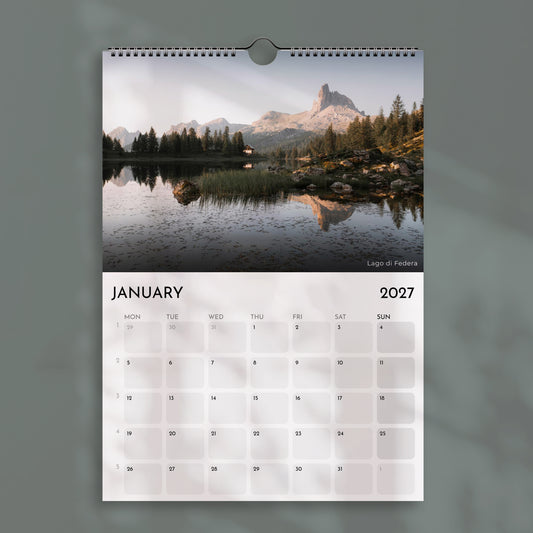
That distinction matters when you're buying a print. A warm golden-hour shot brings softness and warmth to a room. A cooler midday shot — pale stone, blue sky, hard shadows — is starker, more architectural. Neither is better. But a warm golden-hour shot in a north-facing room with little natural light will feel very different to the same print in a bright south-facing space, where it can tip overcooked. The first question to ask about any Dolomites print is not "is it beautiful?" but "when was it taken, and what does that do to the colour?"
The same logic applies across different parts of the range. Shots from the high passes tend to be more exposed and graphic. The plateau landscapes, like Alpe di Siusi, are softer — rolling meadows, scattered huts, peaks rising behind. Both are unmistakably Dolomites. But a plateau shot from Alpe di Siusi sits quietly in a room. A high-pass shot from Passo Giau demands a bit more space around it. If you want to understand what makes this range worth photographing at all, the deeper story of Dolomites photography goes into this in more detail.
The prints I've made here were all shot on location, mostly early morning or late afternoon. Not because those are the rules, but because that's when the range actually opens up. The midday shots I've taken there have rarely been worth printing. The rock goes flat. The light is honest but ungenerous.

Passo Giau – Dolomites (Set of 3)
Passo Giau sits at 2,236 metres and the view from the top is one of the most open in the range. This set of three prints works as a triptych or individually. The high-altitude palette here is cooler and more expansive than the valley shots — this is the Dolomites at their most exposed.
View Print →
Matching the Print to the Place
The Alpe di Siusi is the largest high-altitude plateau in the Alps. In summer it's all wide-open meadows with the Sassolungo and Sciliar peaks sitting behind. In early morning, especially in late spring and autumn, low mist often rolls through the valley below while the meadows catch the first light. That softness is what makes it a different proposition to the rocky drama of Cadini di Misurina — which is all vertical rock, tight spires, the kind of shot that feels much more urgent and graphic. Both are worth printing. They're just very different rooms, and very different moods.
The Cadini di Misurina at golden hour, with wildflowers in the foreground, is one of those shots that looks almost too good to be real. It's not. That's what the place looks like in the right light. The wildflowers are there from late June through July, and the light hits the rock faces from the west in the evening, which is why almost every serious photograph from that spot is taken in the last two hours of daylight.
For the Alpe di Siusi specifically, there are three different prints available here, each shot at different times and in different conditions. One catches clear early morning light with the peaks sharp behind. Another is softer — mist in the valley, the meadow not yet fully lit. A third sits somewhere between: the plateau detailed, the sky open. They're not interchangeable. Have a look at this version of the Alpe di Siusi for the warm sunrise shot, and this one if the misty, softer morning mood is closer to what you remember. If you want the full print collection beyond the Dolomites, the whole range is here.


Hanging Dolomites Prints at Home
The wide plateau shots — Alpe di Siusi especially — are prints with space in them. Sky above, meadow below, peaks in the middle ground. That kind of composition works well above a sofa or a bed, where you want something the eye can move through rather than something that demands attention. A 50x70cm is the minimum I'd suggest for a living room. At 30x40cm it starts to look like a postcard on a big wall.
The triptych from Passo Giau is a different kind of decision. Three panels together read as a single wide landscape, which means they need horizontal wall space. A hallway works well, or a dining room wall where you're sitting opposite it. They don't have to hang touching — a 2 to 3cm gap between each panel is fine and actually helps the eye read them as a sequence rather than a single framed piece.
Cadini di Misurina is a more vertical composition. The spires go upward, and the framing reflects that. It fits well in a space where you want height rather than width — a stairwell, a narrow wall between two doorways, or a home office where you want something with a bit more edge to it. The warm golden-hour tones in that shot mean it sits well alongside wood, leather or warm plaster tones without clashing.


Cadini di Misurina – Dolomites, Italy
The Cadini di Misurina are a cluster of jagged rock towers north of Lake Misurina, reached by a short hike from the road. This shot was taken in the evening, when the wildflowers were still up and the light was hitting the rock faces at an angle. It's one of the most recognisable corners of the whole range.
View Print →"The print that works is the one that matches the specific feeling you're after. The cooler midday palette and the warm enrosadira shots are both Dolomites, but they're different rooms, different moods."


Find the Print That Matches the Place
Every print is made to order, on museum-quality paper, and shipped to your door wherever you are.
Browse Prints →The Dolomites rewards specificity. The more precisely you can identify what it was — the light, the location, the time of year — the more likely you are to find a print that actually holds that feeling rather than just resembling it.
Mark, Chamonix Prints