Wandbilder fürs Schlafzimmer: So finden Sie das richtige Motiv für über dem Bett
Die Wand über dem Bett ist der persönlichste Bereich Ihres Zuhauses. Erfahren Sie, wie Sie ein Motiv wählen, bei dessen Anblick Sie gerne aufwachen.
Drucke shoppen →Die meisten Menschen behandeln die Wand über dem Bett stiefmütterlich. Es kommt etwas dorthin, weil dort eben etwas hängen muss. Dabei ist es genau die Wand in Ihrem Zuhause, über die man sorgfältig nachdenken sollte – denn im Gegensatz zum Wohnzimmer oder Flur verbringen Sie hier täglich aus nächster Nähe Zeit mit ihr. Sie sehen das Bild als Erstes am Morgen und als Letztes am Abend. Was dort hängt, spielt eine größere Rolle, als viele meinen.
Dieser Leitfaden deckt die praktischen Aspekte ab: Größe, Ausrichtung, Aufhänghöhe sowie die Frage, die die meisten überspringen: Welches Motiv funktioniert langfristig im Schlafzimmer und was wirkt nur im Showroom gut?
Was passt wirklich über das Bett?
Es gibt ein typisches Problem beim Aufhängen von Kunst über dem Bett: Es wirkt oft tonal „falsch“. Der Raum fühlt sich leicht unharmonisch an, und es dauert eine Weile, bis man herausfindet, warum. Meistens ist das Bild zu unruhig, zu dramatisch oder zu offensichtlich dekorativ – gewählt, um einen Platz zu füllen, statt eine Bedeutung zu haben.
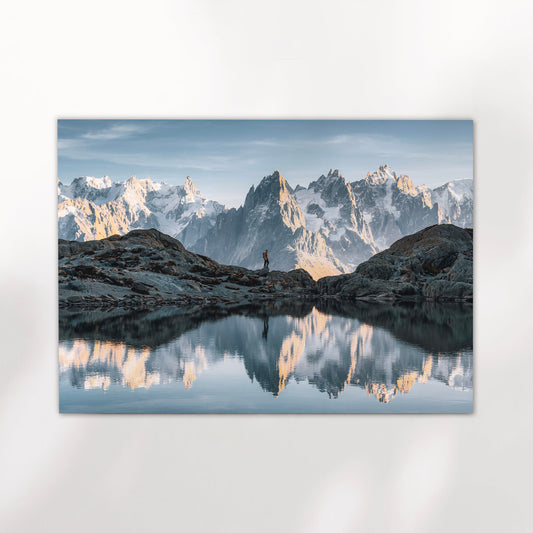
Das Schlafzimmer ist ein ruhigerer Raum als das Wohnzimmer, und das hat nichts mit Designregeln zu tun. Sie empfangen hier keine Gäste. Sie möchten hier nicht repräsentieren. Es ist ein Raum, den Sie wirklich bewohnen, allein oder zu zweit, und die Kunst an der Wand muss sich in diesem Kontext wohlfühlen. Bilder mit Weite tun dies meistens. Eine Hochgebirgsaufnahme, bei der der Himmel die Hälfte des Rahmens einnimmt. Ein stiller See ohne Bewegung. Ein Ort, an dem der Blick landen und zur Ruhe kommen kann.
Im Gegensatz dazu stehen dramatische Nahaufnahmen, kontrastreiche Tierfotografien oder alles mit viel visuellem Rauschen. Solche Drucke können hervorragend in einem Flur oder Arbeitszimmer funktionieren – Orte, an denen man vorbeigeht, statt zur Ruhe zu kommen. Über dem Bett wirken sie oft rastlos. Nicht immer, aber ich habe schon genug Kundenrückmeldungen nach dem Kauf dramatischer Bilder erhalten, um zu wissen, dass man vor der Bestellung darüber nachdenken sollte.
Die Drucke, die im Schlafzimmer am besten funktionieren, strahlen eine gewisse Stille aus. Das ist keine Stilregel, sondern das, was Kunden mir immer wieder berichten, wenn sie Fotos ihrer Räume schicken. Die Bilder, die wirklich gut ankommen, sind jene, die dem Auge einen Ruhepunkt bieten, statt Aufmerksamkeit zu fordern. Wenn Sie darüber nachdenken, wie saisonale Motive generell in der Wohnkultur wirken, gilt dieses Prinzip der Stille ganzjährig im Schlafzimmer, unabhängig von der Jahreszeit auf dem Bild.

Alpspitze, Bayern, Deutschland
Aufgenommen im Wettersteingebirge über Garmisch-Partenkirchen: die Alpspitze in der Dämmerung. Der pastellfarbene Himmel füllt den Großteil des Bildes, und der Berg setzt sich klar davon ab. Es ist trotz des Motivs eine ruhige Aufnahme, weshalb sie hervorragend über dem Bett funktioniert. Erhältlich in verschiedenen Größen, gerahmt oder ungerahmt.
Zum Druck →
Größe, Ausrichtung und Aufhänghöhe
Der häufigste Fehler über dem Bett ist die Wahl eines zu kleinen Formats. Ein 30x40 cm großer Druck über einem Doppelbett verankert den Raum nicht, er wirkt verloren. Für die meisten Betten muss der Druck breit genug sein, um Absicht zu zeigen. Zwei Drittel der Breite des Kopfteils sind ein guter Ausgangspunkt. Für ein Standard-Doppelbett landen Sie bei einem Einzelbild im Bereich von 60x80 cm bis 70x100 cm. Bei einem Kingsize-Bett sollten Sie 80x120 cm oder breiter wählen, oder ein dreiteiliges Set, das als geschlossene Einheit wirkt.
Die Ausrichtung ist über dem Bett wichtiger als fast überall sonst. Das Kopfteil ist ein horizontaler Anker, und ein Druck im Querformat harmoniert auf natürliche Weise damit. Hochkant-Formate können bei sehr hohen Decken funktionieren, bei Standard-Raumhöhen wirken sie jedoch oft aus dem Gleichgewicht, als ob das Bild nach oben entfliehen wollte. Im Zweifelsfall: Querformat wählen.
Ein weiterer Faktor ist das Kopfteil selbst. Ein niedriges, schlichtes Holzkopfteil ist neutral. Ein hohes Polsterkopfteil ist ein eigenständiges visuelles Element, das in Konkurrenz zum Bild tritt. Bei einem Polsterkopfteil benötigen Sie entweder einen Druck, der breit genug ist, um es klar zu dominieren, oder ein Triptychon, das den gesamten Raum umschließt. Ein kleines Einzelbild über einem großen Polsterkopfteil wirkt immer wie eine nachträgliche Notlösung. Falls Sie generell ein Konzept für eine Akzentwand verfolgen, ist dieser Leitfaden über Akzentwände und großformatige Drucke eine empfehlenswerte Ergänzung.
Für ein Triptychon ist das Annestown-Beach-Set unten ein gutes Beispiel dafür, wie drei Paneele horizontal zusammenwirken. Jedes Bild steht für sich, aber alle drei zusammen füllen eine breite Wand, ohne dass ein einzelner Rahmen dominiert. Platzieren Sie sie mit etwa 5-8 cm Abstand zueinander und hängen Sie alle auf exakt gleicher Höhe auf. Es klingt offensichtlich, aber eine Wasserwaage und ein Maßband machen hier einen echten Unterschied.


Motivwahl: Etwas, mit dem man gerne lebt
Dies ist der Teil, den die meisten Ratgeber überspringen. Größe und Platzierung sind lösbare Probleme. Die Wahl des Motivs ist schwieriger, da sie persönlich ist. Aber es gibt Muster. Die Drucke, die ich basierend auf Kundenfotos am häufigsten in Schlafzimmern sehe, sind Landschaften mit weitem Himmel, Küstenszenen und ruhige Tieraufnahmen. Nichts Dramatisches, nichts Lautes. Bilder mit einer gewissen Ruhe, an der man sich nicht sattsieht.
Tierfotografie funktioniert im Schlafzimmer besser, als man denkt, aber die Art des Motivs ist entscheidend. Ein Rothirsch im morgendlichen Nebel ist ein völlig anderes Bild als ein angreifendes Tier oder eine dramatische Jagdaufnahme. Der Bayerischer Hirsch-Druck ist ein gutes Beispiel: weiches Herbstlicht, ein Hirsch halb im Nebel verborgen, erdige Töne, die ruhig im Raum wirken, statt ihn zu beherrschen. Es ist die Art von Bild, die einen belohnt, je länger man hinsieht – genau das, was man in einem Raum möchte, den man über Jahre hinweg betrachtet.
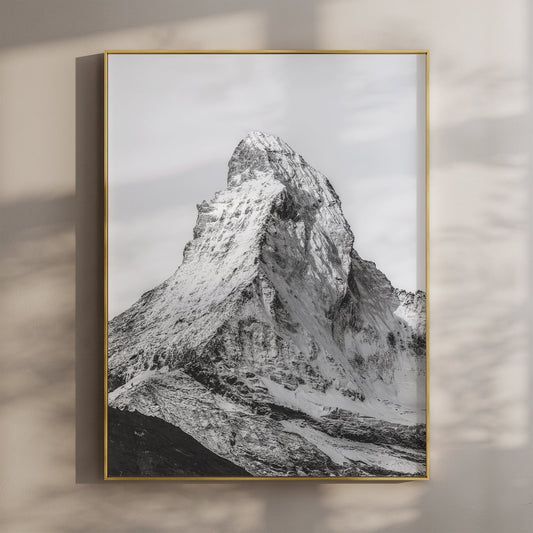
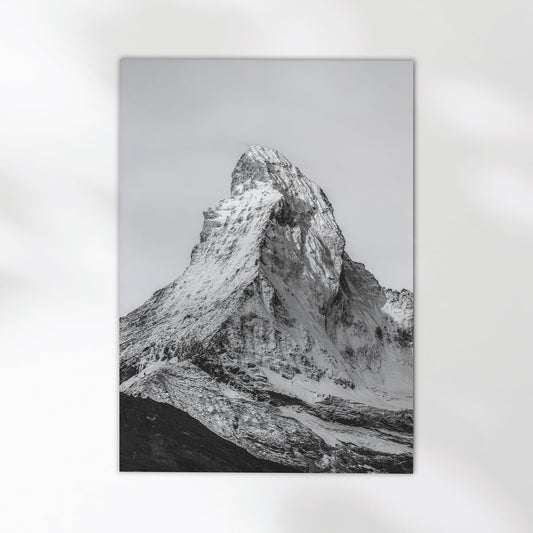
Auch die Wahl zwischen Farbe und Schwarz-Weiß ist überlegenswert. Schwarz-Weiß-Landschaftsfotografie ist im Schlafzimmer verzeihender, da sie nicht mit den Farben im Raum konkurriert. Hat Ihr Schlafzimmer warme Töne, kann ein Farbdruck mit kühlen Farben deplatziert wirken. Eine monochrome Küstenszene, wie das Annestown-Triptychon, umgeht das komplett. Dennoch: Ist der Raum eher neutral und verbindet Sie etwas mit einem Ort, lohnt sich Farbe durchaus. Die Ammersee-Bootshaus-Aufnahme funktioniert im Schlafzimmer gerade deshalb so gut, weil die Farbpalette so zurückhaltend ist: Gold, blasses Grau, stilles Wasser. Es schreit nicht.
Der Kernpunkt ist: Wählen Sie etwas, zu dem Sie eine echte Verbindung haben. Nicht, weil es farblich abgestimmt ist oder die Lücke füllt, sondern weil es für Sie etwas bedeutet. Das Bild über dem Bett wird öfter betrachtet als jedes andere Kunstwerk im Haus. Sorgen Sie dafür, dass es zählt. Stöbern Sie durch die gesamte Kollektion, um sich einen Überblick zu verschaffen, aber beginnen Sie bei den Orten, die Sie kennen oder an die Sie reisen möchten. Dort findet man meist das richtige Motiv.


Hirsch Wildlife, Bayerische Alpen, Deutschland
Aufgenommen in den bayerischen Alpen im Morgenlicht, ist dies eine Tieraufnahme, die im Schlafzimmer funktioniert, weil sie ruht. Keine Dramatik, keine Spannung. Nur ein Hirsch zwischen den Bäumen im sanften Licht. Die erdigen Töne fügen sich natürlich in die meisten Schlafzimmerpaletten ein und die minimalistische Komposition lässt dem Raum Platz zum Atmen.
Zum Druck →


Die Wand über dem Bett lässt man am leichtesten leer, und doch ist es am schwierigsten, sie richtig zu gestalten. Aber wenn es gelingt, ist es der schönste Druck im ganzen Haus. Kunden, die Fotos ihrer Räume schicken, erwähnen diesen Bereich fast immer zuerst.
Mark, Chamonix Prints
Finden Sie den richtigen Druck für Ihr Schlafzimmer
Landschafts-, Küsten- und Tierfotografien, auf Bestellung gedruckt und direkt an Ihre Haustür geliefert. Verschiedene Größen, gerahmt oder ungerahmt erhältlich.
Drucke durchstöbern →