Ideen für eine Akzentwand im Wohnzimmer: Was wirklich funktioniert
Fangen Sie beim Raum an. Wählen Sie dann das Kunstwerk.
Drucke ansehen →Die meisten Ideen für Akzentwände im Wohnzimmer konzentrieren sich auf die Kunst. Was soll aufgehängt werden, wie groß, welcher Rahmen? Doch das Kunstwerk ist meist die letzte Entscheidung, auf die es ankommt. Die erste ist die Platzierung – konkret: welche Wand Sie tatsächlich im Blick haben, wenn Sie sich im Raum aufhalten. Wenn Sie das falsch angehen, geht selbst ein großartiger Druck unter.
Dies ist ein praktischer Leitfaden, wie eine Akzentwand gelingt: welche Wand Sie wählen sollten, wie Sie über die Größe nachdenken und wann ein einzelner großer Druck besser ist als eine Gruppe kleinerer – und wann nicht. Das meiste, was ich darüber weiß, stammt aus Fotos, die mir Kunden von ihren Drucken an ihren Wänden schicken. Keine Showrooms. Echte Wohnzimmer mit echten Möbeln und echtem Licht.
Welche Wand wird tatsächlich zum Blickfang
Der größte Fehler, den Menschen bei Ideen für Akzentwände im Wohnzimmer machen, ist die Wahl der größten Wand im Raum. Meist ist das die Wand hinter dem Sofa. Das ist nicht falsch, aber auch nicht automatisch richtig. Die Wand hinter Ihrer Sitzgruppe ist die, die Ihre Gäste sehen. Die Wand, auf die Sie schauen, wenn Sie sich hinsetzen, ist die, mit der Sie leben.
Das sind unterschiedliche Aufgaben. Ein Druck an der Wand gegenüber Ihrem Sofa wird Teil Ihres täglichen Blickfelds. Sie sehen ihn jedes Mal, wenn Sie sich hinsetzen, jedes Mal, wenn Sie durch den Raum gehen. Hier ist die Atmosphäre am wichtigsten. Ein Druck an der Wand hinter Ihnen ist für andere Leute. Er prägt die Wirkung des Raums, wenn jemand hereinkommt, aber Sie selbst schauen nie darauf.
Beides ist nicht verkehrt. Aber ich habe das Kunstwerk, das mir wichtig ist, lieber an der Wand, die ich tatsächlich betrachte. Die Wand, auf die Sie beim Sitzen schauen, belohnt etwas mit Tiefe und Weite – eine Landschaft mit Himmel, ein Gebirgszug, der dem Auge Raum zum Wandern lässt. Die Wand hinter dem Sofa verträgt etwas Grafischeres, Direkteres, weil es schnell und aus der Distanz erfasst wird. Wenn Sie darüber nachdenken, wie ein einzelner großer Druck einen Raum verändert, ist dieser Unterschied wichtig, bevor Sie etwas kaufen.
Noch ein Punkt zur Platzierung: Die Wand, die Sie beim Betreten des Raums sehen, hat oft mehr Wirkung, als man erwartet. Ein Druck am Ende einer Sichtachse – etwas, das Sie beim Hineingehen wahrnehmen – setzt den Ton für den ganzen Raum schneller als alles andere. Wenn Ihr Wohnzimmer beim Betreten einen natürlichen Blickpunkt bietet, ist diese Wand oft mehr Aufmerksamkeit wert als die, die Sie intuitiv gewählt hätten.

Aescher Guesthouse – Appenzell, Schweiz
Dies ist ein Landschaftsdruck mit echter Weite. Die Felswand, das Tal darunter, der Himmel darüber – das Motiv bietet viel Raum. Es wirkt am besten an der Wand, auf die Sie blicken, nicht an der Wand hinter Ihnen. In 50x70cm oder größer an einer neutralen Wand verdient dieses Bild seinen Platz.
Druck ansehen →
Einzelner Druck oder Gruppierung: Was wann funktioniert
Die ehrliche Antwort ist, dass man bei einem einzelnen großen Druck weniger falsch machen kann. Zwei oder drei kleinere Drucke in einer Gruppe können hervorragend aussehen, erfordern aber mehr Entscheidungen: Abstände, Ausrichtung, ob die Bilder tatsächlich gut nebeneinander passen. Die meisten Galeriewände, die nicht überzeugen, scheitern an einem dieser drei Punkte, nicht an den Drucken selbst.
Ein einzelner Druck ab 50x70cm wirkt wie ein Kunstwerk. Dasselbe Bild in 30x40cm an einer großen Wand wirkt wie ein Foto – kleiner als die Wand, kleiner als die Möbel, kleiner, als Sie es sich wahrscheinlich wünschen. Der Leitfaden zur Größe von Wandbildern erläutert die Zahlen im Detail, aber die Kurzfassung lautet: Wenn Sie unsicher sind, wählen Sie es größer, als Sie denken.
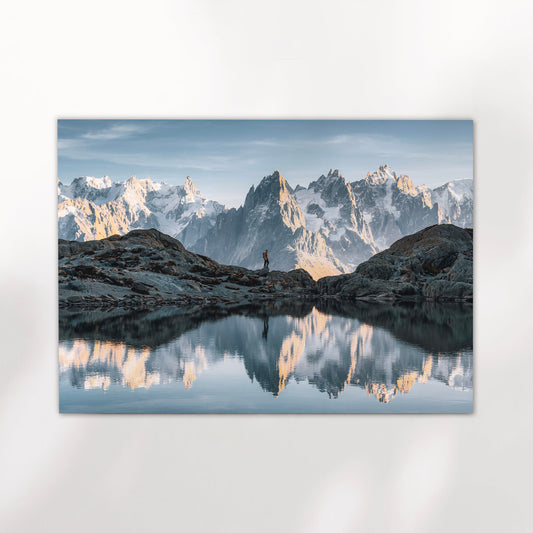
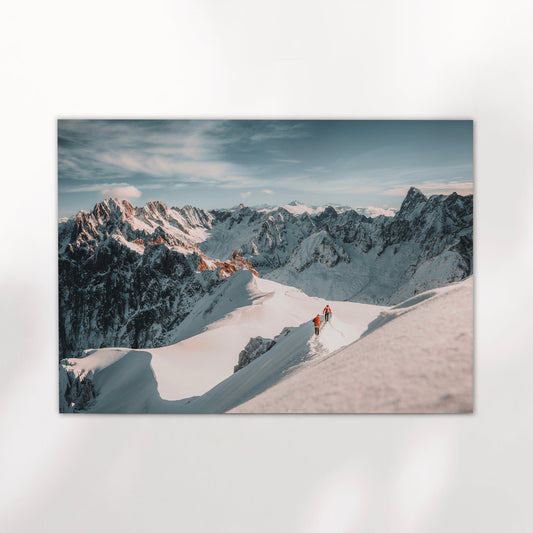
Gruppierte Drucke funktionieren dann gut, wenn die Bilder tatsächlich zusammengehören – gleicher Ort, gleiche Farbpalette, gleiche Stimmung. Ein Paar schwarz-weißer Alpenaufnahmen, in gleicher Höhe und mit einheitlichen Abständen aufgehängt, sieht immer durchdachter aus als eine wilde Mischung verschiedener Stile und Motive. Die Beziehung zwischen den Bildern zählt genauso wie die Bilder selbst. Ein abgestimmtes Set minimiert das Risiko. Etwas wie das Set aus Bionnassay und Grandes Jorasses funktioniert genau deshalb so gut, weil beide Bilder im selben Gebirge und bei gleichem Licht aufgenommen und in der Nachbearbeitung einheitlich behandelt wurden – sie gehören zusammen.
Auch das Hochformat wird für Wohnzimmerwände oft übersehen. Die meisten Menschen wählen instinktiv Querformate, weil sie über dem Sofa natürlich wirken, aber ein hohes Porträtformat an einer schmalen Wand zwischen Fenstern oder neben einem Türrahmen kann einem Raum Halt geben, in dem ein Querformat einfach nur verloren wirken würde. Wenn die Wand höher als breit ist, arbeiten Sie damit.


Farbe oder Schwarz-Weiß für Wohnzimmerwände
Schwarz-Weiß-Fotografie funktioniert in fast jedem Wohnzimmer. Das ist keine bloße Vorliebe, sondern eine Tatsache. Sie konkurriert nicht mit Ihren Möbeln, der Wandfarbe oder Ihren Kissen. Sie bleibt dezent und überlässt der Komposition und dem Motiv die Hauptrolle. Für eine Akzentwand, bei der Sie sich noch nicht sicher sind, wie sich der Raum entwickeln wird – neues Sofa, neue Wandfarbe, andere Jahreszeit – ist Schwarz-Weiß die „fehlertolerantere“ Wahl.
Farbige Landschaftsdrucke sind anspruchsvoller. Ein starkes Farbbild kann sich mit allem umgebenden beißen, wenn die Tonalität nicht stimmt. Aber wenn es funktioniert – wenn das Blaugrau eines Gletschers auf einer warmen, neutralen Wand ruht oder die Erdtöne einer Alm die Möblierung ergänzen –, wirkt es besser als jeder Schwarz-Weiß-Druck. Der Schlüssel ist, dass die dominierenden Farben des Drucks entweder mit dem Raum harmonieren oder bewusst einen Kontrast bilden. Ein versehentlicher „Clash“ ist der einzige echte Fehler.
Auch die Raumtemperatur spielt eine Rolle. Warme Räume – Holzböden, bernsteinfarbenes Licht, Erdtöne – kommen oft besser mit Drucken zurecht, die ebenfalls Wärme ausstrahlen. Kühle, weiß gestrichene Räume mit grauen Möbeln vertragen mehr Kontrast, und Schwarz-Weiß-Drucke mit großem Tonwertumfang sehen darin hervorragend aus. Das ist keine strikte Regel, sondern ein Muster, das man kennen sollte. Mehr dazu finden Sie im Leitfaden Berg-Wandkunst für Wohnzimmer, falls Sie tiefer einsteigen möchten.


"Die Drucke, die an einer Akzentwand am besten funktionieren, sind jene, die Weite bieten. Himmel. Distanz. Etwas, wohin das Auge wandern kann."
Ein letzter Punkt, der selten genug gesagt wird: Der Raum verändert den Druck, und der Druck verändert den Raum. Eine große Landschaft in einem unruhigen Raum wirkt überladen. Derselbe Druck in einem ruhigeren Umfeld, an der richtigen Wand und ohne konkurrierende Elemente drumherum, kann die Stimmung des gesamten Raums wandeln. Den Bereich um das Bild herum freizuräumen – kleinere Gegenstände zu entfernen, das Regal in der Nähe zu vereinfachen – ist oft die effektivste Maßnahme, bevor Sie überhaupt etwas aufhängen.

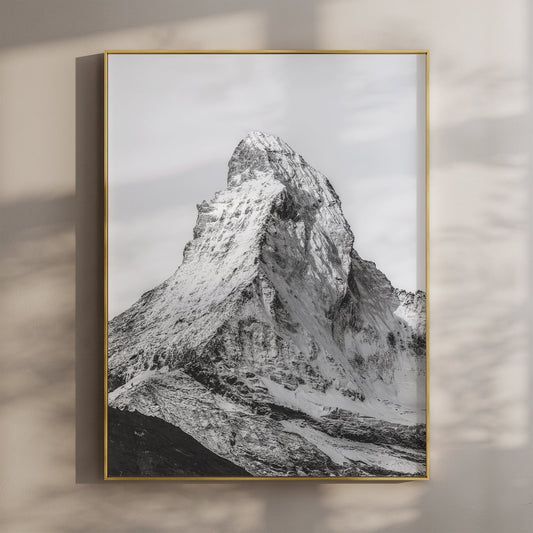
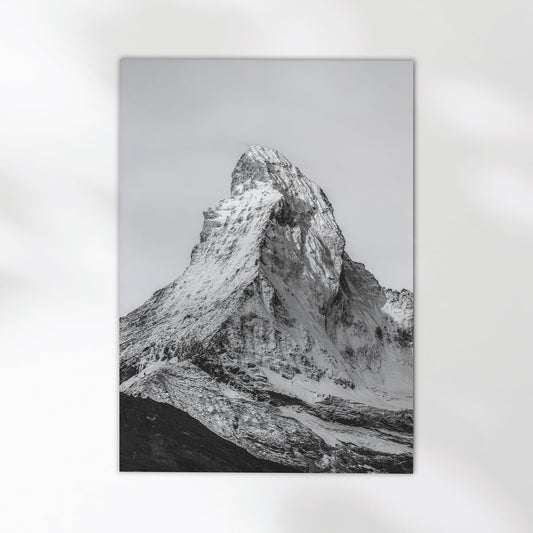
Aiguille de Bionnassay – Chamonix, Frankreich (Schwarz-Weiß)
Hochformat, starker grafischer Kontrast, wenig visuelle Unruhe. Dies ist ein Druck, der an einer schmalen Wand, neben einem Fenster oder überall dort funktioniert, wo ein Querformat zu breit wirken würde. Die monochrome Behandlung sorgt dafür, dass er sich dezent in Räume einfügt, in denen bereits viel los ist.
Druck ansehen →


Die Drucke in der gesamten Kollektion reichen von den Schweizer Alpen über die irische Küste bis zu den Dolomiten. Wenn Ihr Wohnzimmer etwas mit Weite und Distanz vertragen könnte, ist das ein guter Ausgangspunkt zum Stöbern.
Mark, Chamonix Prints
Finden Sie den passenden Druck für Ihre Wand
Jeder Druck wird auf Bestellung in Giclée-Qualität gefertigt und direkt zu Ihnen nach Hause geliefert. Erhältlich in verschiedenen Größen von A4 bis A0.
Drucke durchstöbern →