What Size Wall Art Should I Buy? A Room-by-Room Guide
The most common mistake isn't going too big. It's going too small and wondering why it looks wrong.
Shop the Collection →Sizes look reasonable on a screen. They look different on a wall. Most people who get it wrong go too small, not too big, and the fix is obvious in hindsight but hard to see coming.
Why Small Prints Fail on Big Walls
A 50x70cm print above a sofa reads as an artwork. The same image at 30x40cm in the same spot reads as a photograph, and not in a good way. The room doesn't shrink to meet it. It just sits there looking slightly lost, and the wall around it draws more attention than the print itself.
Product pages show prints against nothing. In a real room, with a sofa, a lamp, and a ceiling, a 30x40cm print is competing with a lot of other things for your eye. It usually loses.
The easiest way to test this before ordering is to tape out the dimensions on your wall with masking tape. It takes five minutes and it's the single most useful thing you can do. If the taped rectangle looks smaller than you expected, it will look smaller still once it's framed and on the wall. Go one size up. You can always find a smaller wall for a smaller print. You can't un-shrink a wall.
The other thing worth knowing: print orientation matters more than most people account for. A portrait print on a wall above a wide, horizontal sofa creates a different tension than a landscape format. Neither is wrong, but a tall portrait format above a wide sofa can look like it wandered in from a different room. Landscape tends to sit more naturally in that spot. For more on how format and scale interact in living rooms, the living room feature wall guide covers this in more detail.

Aescher Guesthouse – Appenzell, Switzerland
The Aescher Guesthouse sits wedged against a cliff face in the Appenzell region, an image that rewards space. At 50x70cm or larger, the detail in the rock face and the depth of the valley come through properly. At 30x40cm, most of that is gone.
View Product →
Living Room Sizing: What Actually Works
The living room is where most sizing questions come from, and with good reason. It's also where most mistakes happen. The main issue is that people treat wall art as a finishing touch rather than an anchor. They buy everything else first, then look for something to fill the gap. By that point the wall is already defined by the furniture around it, and the print has to work within that context.
The prints that work best in living rooms are the ones with space in them. Sky. Water. Open mountain faces. Somewhere for the eye to rest. Busy, detailed compositions at small sizes look cluttered. The same image at 70x100cm gives those details room to breathe and the eye somewhere to move.
For a single large print above a sofa, the practical sweet spot for most living rooms is 50x70cm at the minimum, with 70x100cm being the size that tends to feel right once it's actually on the wall. If you have a double-height wall or a run of space above a console table with nothing else nearby, go larger still. The wall won't look smaller for it.
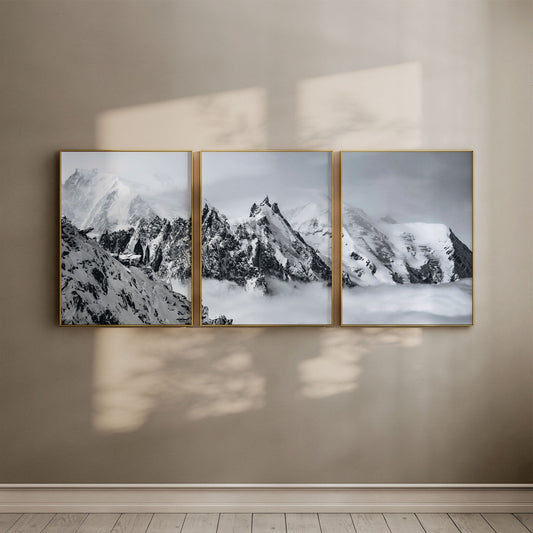
Sets of two prints are a reliable option when you want to cover more wall without committing to one large format. Two prints at 40x50cm or 50x70cm, hung side by side with a small gap, read as a considered pairing rather than two small things that happened to end up next to each other. The Aiguille de Bionnassay and Grandes Jorasses set is a good example of this done in black and white, where both images share a tonal language that holds them together.


Bedroom and Hallway: Different Rules
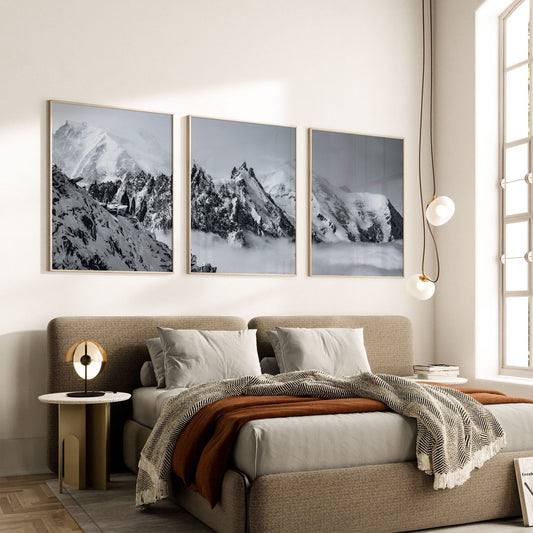
Bedrooms are easier to get right than living rooms, but people still tend to go too small. Above a double bed, you're looking at a wall that's typically 150cm wide or more, framed by bedside tables on each side. A single print at 30x40cm above that expanse looks like an afterthought. A 50x70cm portrait print, or two prints at 40x50cm hung side by side, sits properly in that space and holds the eye at the moment when that's exactly what you want it to do.
Hallways are the one place where smaller prints can earn their keep, because the viewing distance is short and the wall height relative to the corridor width usually means a large print would feel crowded. A 30x40cm print in a narrow hallway can work well. The same print in a living room will not. Context is everything, and ceiling height changes the equation more than most guides acknowledge. A room with 3-metre ceilings needs larger art than the same footprint with standard 2.4-metre ceilings, because there's simply more visual weight above eye level pressing down.
For a detailed breakdown by room, the wall art size guide goes further into specific measurements. And if you're still working out which images suit which rooms, the full collection is sorted by subject and orientation, which makes it easier to filter by format before you start worrying about size.


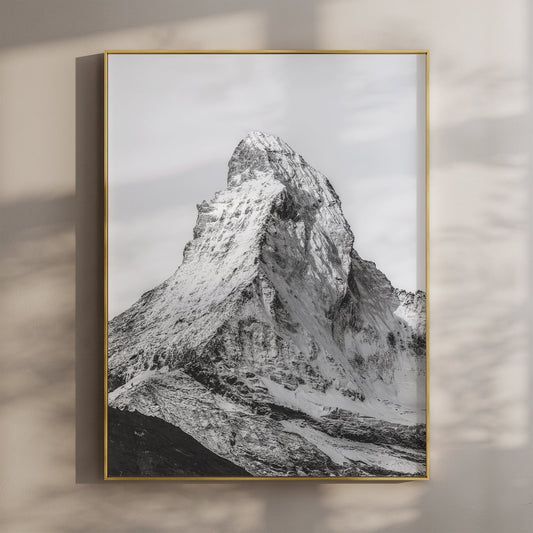
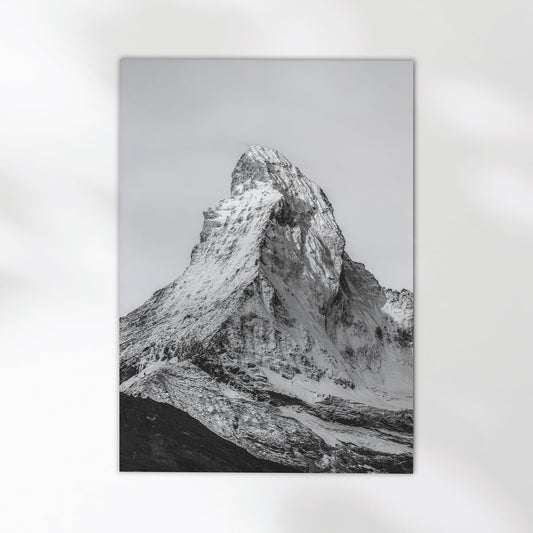
Aiguille de Bionnassay – Chamonix, France (Black & White)
A clean monochrome summit portrait from the Mont Blanc massif. The lack of colour makes sizing decisions simpler — it will work with almost any wall tone — and the portrait format suits narrower walls where a landscape print would fight the proportions of the space.
View Product →"When in doubt, go one size up. You can always find a smaller wall for a smaller print."


Sizing is the decision most people get wrong once and then get right forever. Tape the wall. Go one size up if you're unsure. And choose an image that has space in it, something that gives the eye somewhere to go. The room will do the rest.
Mark Fitzsimons, Chamonix Prints
Find the Right Print for Your Wall
Mountain, landscape and coastal photography prints. Real places, museum-quality paper, delivered in 5-7 business days.
Browse the Collection →