Oversized Wall Art: When to Go Big and How to Pull It Off
Scale is the decision most people get wrong. Here's how to get it right before you buy.
Shop the Collection →Most people searching for oversized wall art already know they want something large. The question is whether the specific wall they have in mind can actually carry it. The gap between a print that owns a room and one that looks awkward is usually the proportions around it, not the image itself. This guide is about those proportions: how to read a wall, what size to go for, and what trips people up when they try to go big.
Reading the Wall Before You Buy
Measuring a wall is straightforward. Knowing what to do with that number is less obvious. The measurement you need isn't the full width of the wall — it's the usable width, which means subtracting the space the print needs to breathe. A 70x100cm print needs at least 15-20cm of clear wall on each side.
The height matters just as much as the width, and it depends on what's in the room. Above a sofa, the bottom of the print should sit roughly 15-20cm above the furniture. Any closer and they compete. Any further and the print floats. In a room with standard 240cm ceilings, this limits how tall a print can realistically go before it starts crowding the ceiling. A 100cm tall print in a room with 240cm ceilings leaves very little breathing room above and below. It can feel like the room is straining to contain it rather than showing it off.
The shape of the wall matters too. Long horizontal walls suit landscape-format prints. A narrow wall between two door openings usually works better with portrait orientation. Staircase walls are the one exception where very tall portrait prints earn their keep, because the eye is already moving upward. Hanging a wide horizontal print in a tall, narrow space is one of the most common mistakes. The print fights the architecture and neither wins.
One useful check before committing to a size: cut out the dimensions in paper or newspaper and tape it to the wall. It sounds like something you'd skip. Do it anyway. Thirty seconds of paper on a wall beats an hour of second-guessing after the print arrives. You can also step back and see it from the sofa or the doorway, which is where the print will actually be seen from.

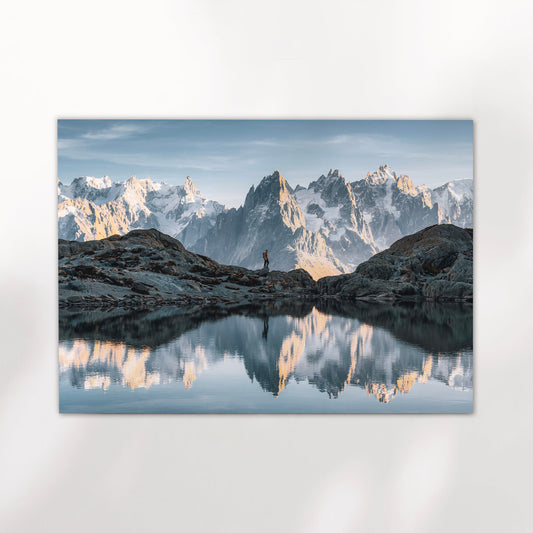
Aescher Guesthouse – Appenzell, Switzerland
A wide mountain landscape with sky and space around the subject. At 70x100cm or larger, the composition holds without crowding itself. The kind of image that needs room to work — and rewards it.
View Product →
Choosing the Right Image for Large Scale
Not every image suits a large format. The ones that work at scale tend to have space built into the composition — sky, water, open foreground. Something for the eye to settle into before it moves to the subject. A cluttered or very detailed image can look impressive as a thumbnail but becomes oppressive at 70x100cm on a wall you walk past every day.
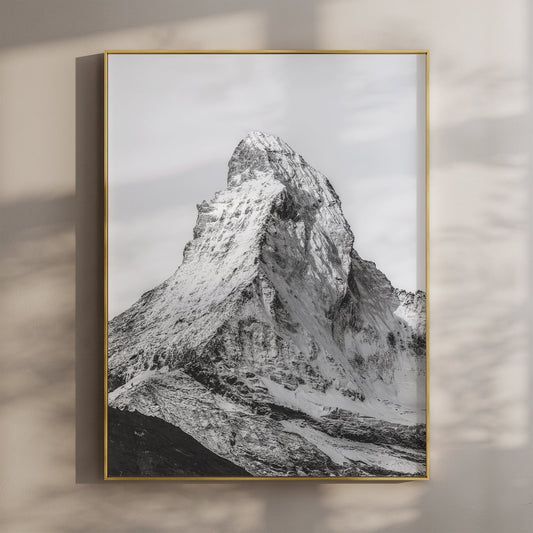
Black and white prints are more forgiving in most rooms. They don't pull colour from the walls or furniture, so the scale becomes the main event rather than a clash of tones. A large black and white mountain print above a pale sofa in a neutral room tends to work almost regardless of the exact sizing decisions, because the image isn't competing with anything. Colour landscape prints are harder at large scale — the colours amplify, and if they don't match what's already in the room, the problem only gets worse at bigger sizes.
Portrait-format prints deserve more attention than they usually get. Most people default to landscape orientation for large wall art, but a tall print in a room with good ceiling height can be more effective than a wide one. It draws the eye up, which makes a room feel larger rather than wider. For rooms above a bed, a portrait print at around 60x90cm or 70x100cm often works better than a wide horizontal, particularly in a room where the bed takes up most of the horizontal space already. There's more on that in the bedroom wall art guide if that's the space you're working with.


The Mistakes That Make Large Prints Look Wrong
The most common one is going just slightly too small. It sounds counterintuitive — people worry about buying something too large — but undersized art on a large wall is a far more common problem. A 50x70cm print above a three-seat sofa in an open-plan living room will look like a postcard. It needs to be bigger than feels comfortable when you're looking at it on a screen. The wall reduces everything.
The second mistake is hanging a print too high. Eye level means the centre of the print at around 145-150cm from the floor, not the top edge. In practice this means the bottom of a 70x100cm print sits at about 95cm from the floor. That's lower than most people instinctively hang things, and it almost always looks better. Above a sofa the gap between the furniture and the bottom of the print should be closer to 15-20cm, which usually pulls the hanging point down further than expected.
The third is ignoring the room it's going into. Oversized wall art works best in rooms where there's enough visual space around it — not just wall space, but furniture that doesn't crowd it. A large print in a small, heavily furnished room tends to make everything feel compressed. If the room is busy, a slightly smaller print with more breathing room on the wall will almost always read better than the largest size that technically fits.
If you're considering something for a hallway or staircase, the principles are the same but the practical constraints are tighter. Narrow hallways limit width, but height is often more available. A tall portrait print at 50x70cm or 60x90cm tends to work better in those spaces than a wide horizontal that has to compete with a narrow corridor. For more options in that vein, the Switzerland wall art guide has a range of formats worth looking at.


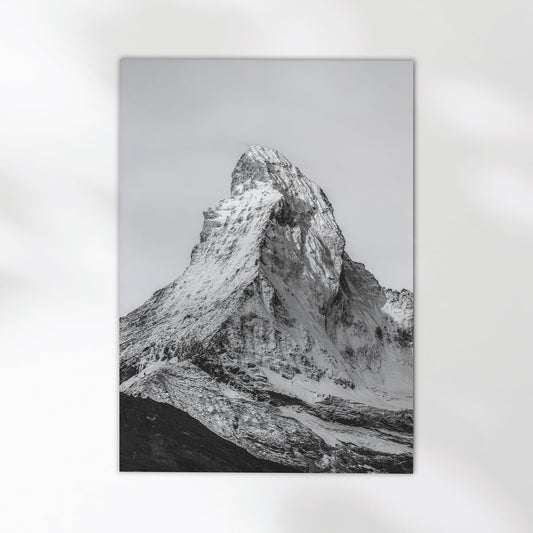
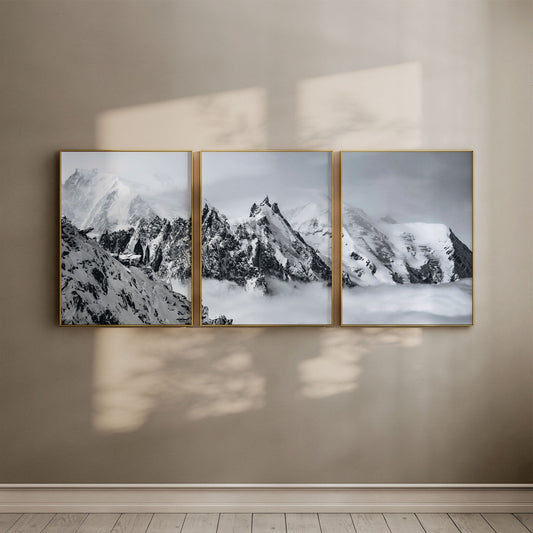
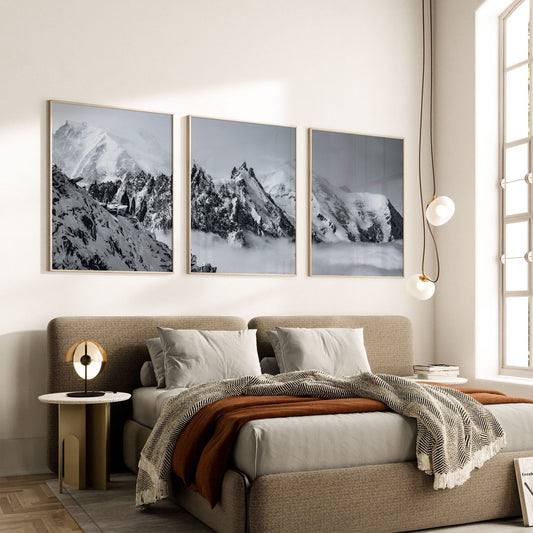
Aiguille de Bionnassay & Grandes Jorasses – Set of 2 (Black & White)
A paired set is sometimes a better answer than a single oversized print. Two prints hung with 10-15cm between them can fill the same width as a 100cm horizontal, with more flexibility on placement and easier hanging. These two match in tone and subject — they work as a pair without looking forced.
View Product →


One last thing worth saying: the prints that tend to work best at large scale are the ones with some quiet in them. Not minimal necessarily, but not frantic. A landscape with sky. A mountain with open foreground. Something that rewards looking at rather than demanding attention. At 70x100cm on your wall, you'll be living with it every day — that's worth factoring in. Browse the full collection if you want to see what's available across formats and sizes.
Mark Fitzsimons, Chamonix Prints
Find the Right Print for Your Wall
Landscape and mountain photography prints in a range of sizes. Delivered in 5-7 business days.
Browse the Collection →